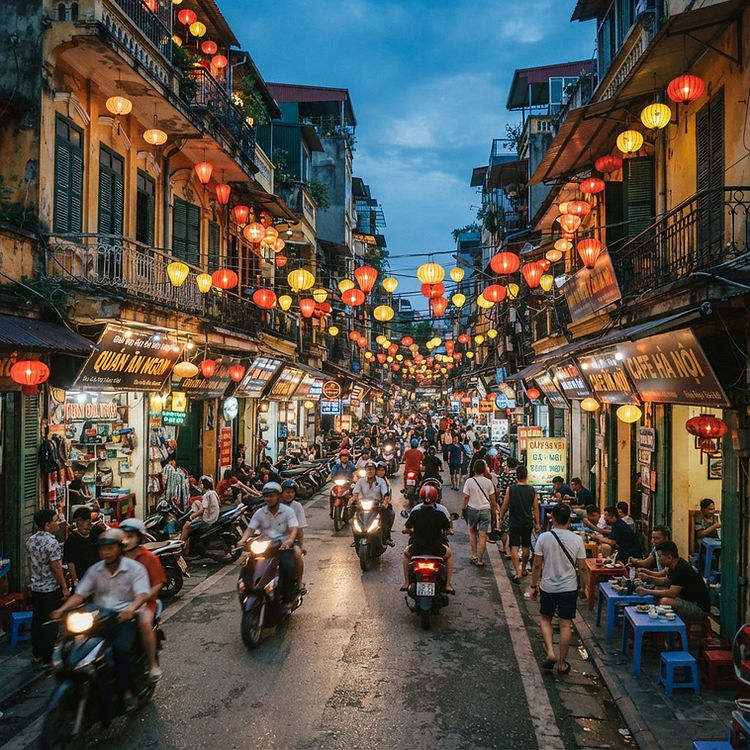
The culinary scene in Hanoi revolves around specialized shops that often focus on a single dish, refined over generations. Pho, a clear noodle soup featuring beef or chicken, represents the primary breakfast tradition for residents. Another essential dish is bun cha, which consists of grilled pork served with vermicelli noodles and fresh herbs in a light, sweet broth.
Street markets serve as the lifeblood of the city food culture, providing access to fresh produce and regional ingredients. The Old Quarter remains the primary destination for those looking to experience traditional dining, with small plastic chairs and low tables lining the narrow sidewalks. Dining here is a public activity, often occurring in the open air among the flow of traffic.
Regional flavors emphasize balance, relying on fresh greens and subtle seasoning rather than heavy oils or heat. Diners navigate these lanes to find stalls that have operated in the same location for decades. The local appetite for communal, accessible food defines the daily routine and the social atmosphere found within these densely packed city blocks.
Destinations in this story

Related articles

Cape Town Culinary Traditions And Flavors
Cape Town offers a distinct culinary landscape defined by Malay spices, local seafood, and a vibrant culture of markets and modern vineyard dining experiences.

Exploring authentic dining culture in Cairo
Egyptian cuisine relies on legumes, fresh bread, and regional spices, providing a foundation for daily meals found in markets, street stalls, and traditional neighborhood cafes.

A Culinary Exploration Through Marrakech Souks
Marrakech offers a diverse palate defined by tagines, couscous, and street snacks, deeply rooted in centuries of tradition and local agricultural practices found within the city.