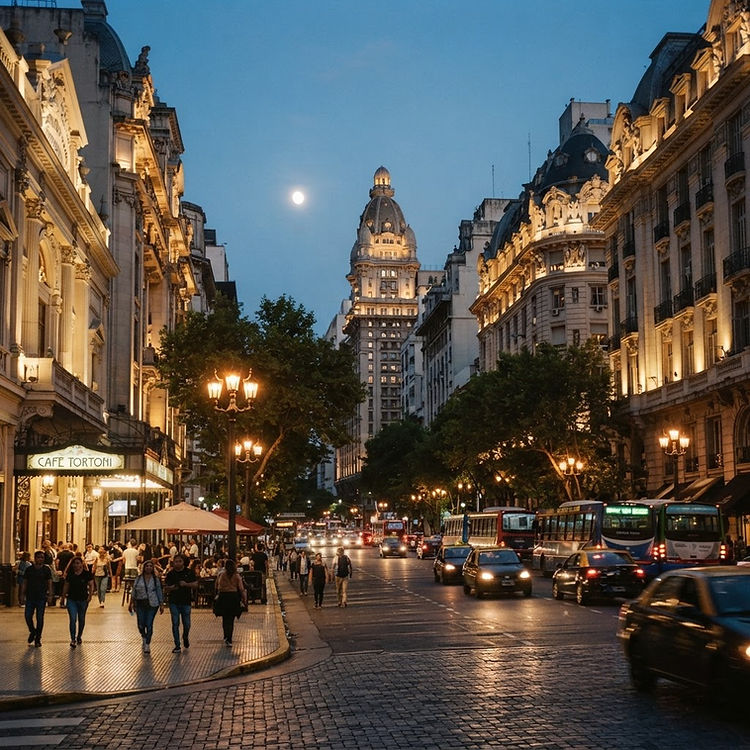
The culinary landscape is deeply anchored in the tradition of the asado, where various cuts of beef are grilled over open flames. This practice is central to local social life, often shared in restaurants known as parrillas. Alongside the focus on protein, the influence of Italian heritage is evident in the prevalence of fresh pasta dishes and pizza available in cafes throughout the urban core.
Markets play a vital role in local consumption, providing access to regional produce, cheeses, and artisanal goods. Neighborhoods such as Palermo offer a concentration of restaurants that emphasize both traditional recipes and modern techniques. Dining culture is characterized by late hours, with many residents beginning their evening meals well after the sunset, following a pace that favors conversation and slow enjoyment of wine.
Beyond savory options, the local appetite for sweets remains prominent, particularly with the widespread use of dulce de leche in pastries and desserts. The combination of high-quality local ingredients and diverse culinary influences ensures that the dining experience reflects the history of the city and its varied population.
Destinations in this story

Related articles

Cape Town Culinary Traditions And Flavors
Cape Town offers a distinct culinary landscape defined by Malay spices, local seafood, and a vibrant culture of markets and modern vineyard dining experiences.

Exploring authentic dining culture in Cairo
Egyptian cuisine relies on legumes, fresh bread, and regional spices, providing a foundation for daily meals found in markets, street stalls, and traditional neighborhood cafes.

A Culinary Exploration Through Marrakech Souks
Marrakech offers a diverse palate defined by tagines, couscous, and street snacks, deeply rooted in centuries of tradition and local agricultural practices found within the city.