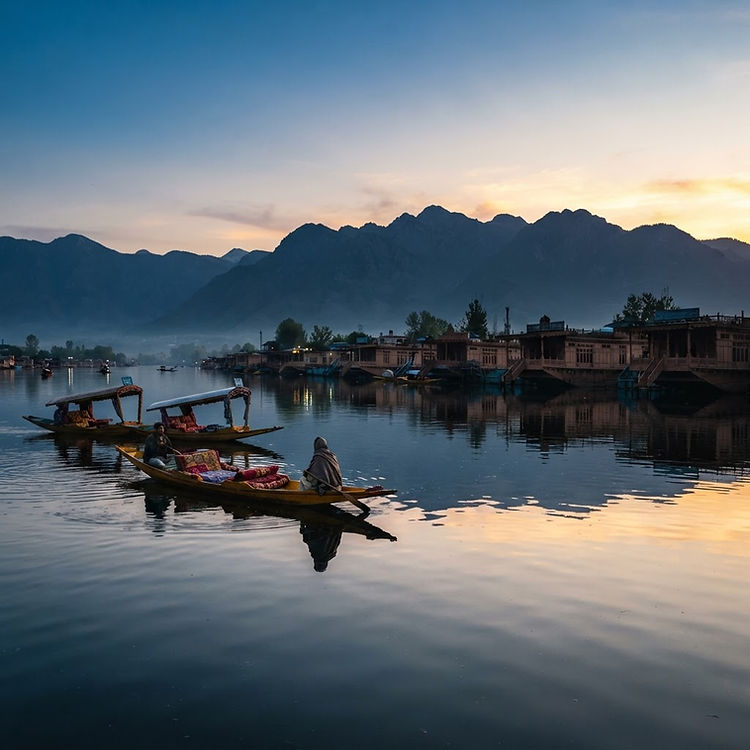
The architecture of Srinagar is marked by distinctive timber construction techniques, most visible in the city historic wooden mosques. These structures represent a synthesis of regional craftsmanship and spiritual requirements, utilizing local wood to create durable, intricate facades. The aesthetic legacy of these buildings provides a constant reference point for the city growth and its ongoing architectural preservation efforts.
Landmarks such as the Shankaracharya Temple occupy prominent positions, offering expansive perspectives over the entire city and the surrounding lake network. The placement of such sites suggests a long-standing emphasis on elevation and observation, connecting the built environment with the natural grandeur of the mountain backdrop. These locations serve as both functional orientation markers and symbols of the regional heritage.
The integration of water into the urban design is reinforced by the layout of historical bridges and ghats. These monuments facilitate movement across the Jhelum River, which bisects the city. Each bridge serves as a structural landmark that connects different urban districts, reflecting the reliance on riverine transport that historically governed the city expansion and social connectivity among the diverse neighborhoods.
Destinations in this story

Related articles

Exploring The Distinct Neighborhoods Of Cape
Cape Town comprises various districts that offer different experiences, from historic architecture and vibrant streets to modern residential areas and quiet suburban landscapes.
Significant Monuments Of The Cape Peninsula
Key monuments across Cape Town represent the complex historical trajectory of the city, serving as anchors for understanding both colonial impact and political change.
Planning A Day Around Iconic Attractions
Organizing a day in Cape Town requires balancing natural heights and maritime history, allowing enough transition time between mountain views and the bustling waterfront.