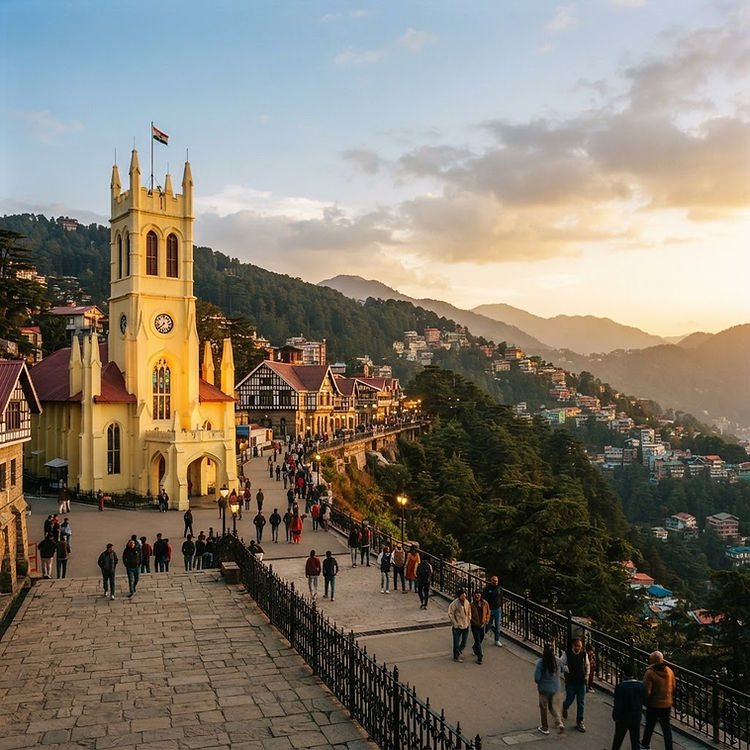
The Viceregal Lodge, also known as Rashtrapati Niwas, stands as one of the most prominent architectural landmarks. Constructed during the late nineteenth century, its stone masonry and intricate woodwork represent the Jacobethan style favored during the colonial period. It remains a focal point for understanding the scale of the administrative presence that defined the town for several decades during the summer months.
Another significant landmark is the railway station, which serves as the terminus for the narrow-gauge track originating from Kalka. The engineering involved in constructing this line through the rugged terrain demonstrates the technical ambition of the period. The station is not merely a transport hub but a symbol of the connection between the highland town and the plains below, influencing the region's overall development.
These landmarks are maintained to reflect their historical purpose while serving the modern town. Their existence provides a physical context for the development of the city, anchoring the mountain settlement within a broader narrative of regional expansion. Observing these structures offers a clear view into the priorities of the builders and the enduring nature of colonial-era design.
Destinations in this story

Related articles

Exploring The Distinct Neighborhoods Of Cape
Cape Town comprises various districts that offer different experiences, from historic architecture and vibrant streets to modern residential areas and quiet suburban landscapes.
Significant Monuments Of The Cape Peninsula
Key monuments across Cape Town represent the complex historical trajectory of the city, serving as anchors for understanding both colonial impact and political change.
Planning A Day Around Iconic Attractions
Organizing a day in Cape Town requires balancing natural heights and maritime history, allowing enough transition time between mountain views and the bustling waterfront.