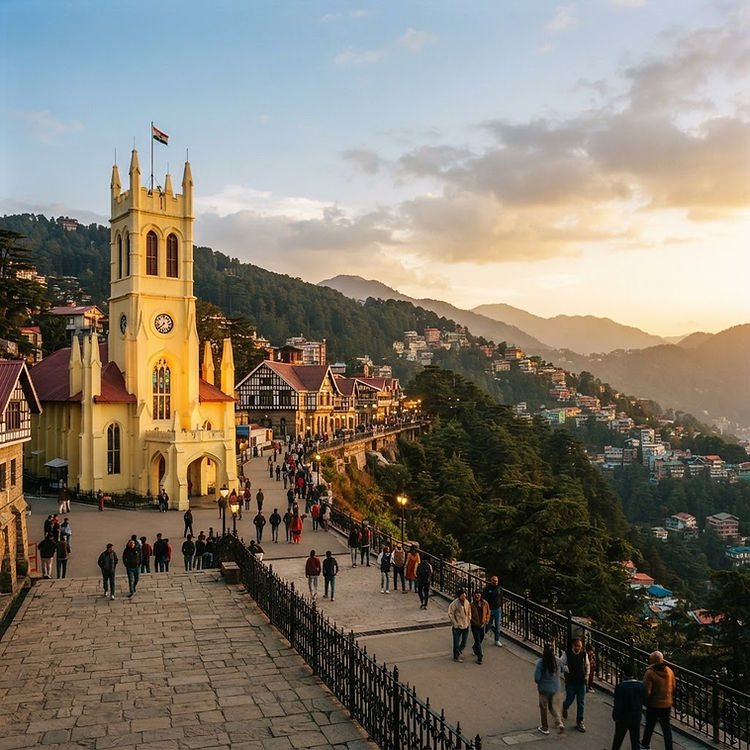
The history of Shimla centers on its designation as the summer headquarters of the British Raj in 1864. Chosen for its temperate climate, the town became a hub for colonial administration and social activity, fostering a unique architectural style that combined timber and stone. This era defined the urban layout, with grand buildings constructed along the dramatic ridge-line to showcase imperial influence and authority.
Following India's independence, the city transitioned into the administrative center of Himachal Pradesh. Despite the change in governance, the structures from the colonial period remain central to the town's character. The influence of the British period is reflected in the layout of the streets, the preservation of early administrative buildings, and the continued use of the central promenade as a primary social space for local residents.
Modern Shimla operates as both a historical site and a contemporary city. Visitors encounter this dual reality while walking past well-maintained colonial facades nestled against the backdrop of the Himalayan foothills. The past remains woven into the daily rhythm of the streets, connecting current municipal life to the foundational decisions made during the nineteenth century.
Destinations in this story

Related articles

Exploring The Distinct Neighborhoods Of Cape
Cape Town comprises various districts that offer different experiences, from historic architecture and vibrant streets to modern residential areas and quiet suburban landscapes.
Significant Monuments Of The Cape Peninsula
Key monuments across Cape Town represent the complex historical trajectory of the city, serving as anchors for understanding both colonial impact and political change.
Planning A Day Around Iconic Attractions
Organizing a day in Cape Town requires balancing natural heights and maritime history, allowing enough transition time between mountain views and the bustling waterfront.