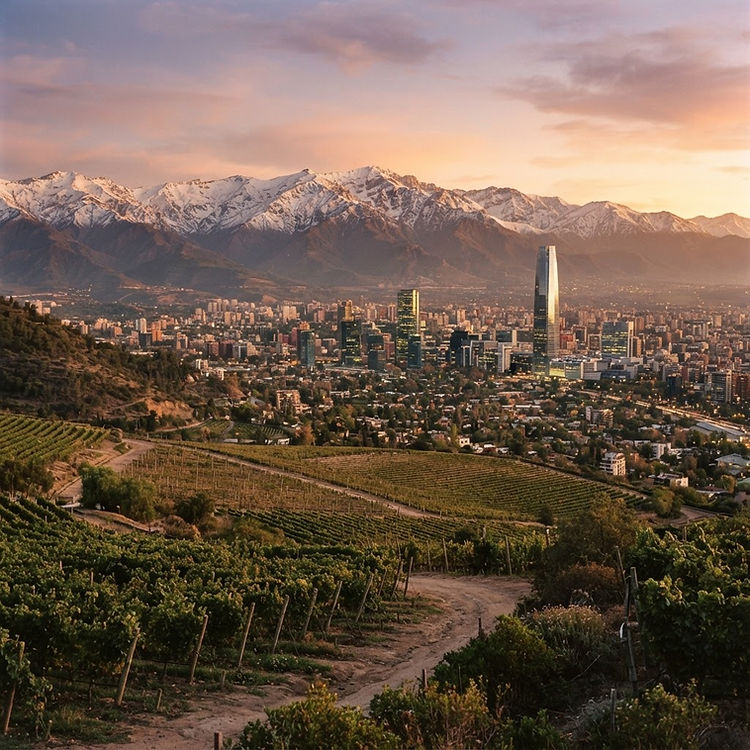
Founded in 1541 by Spanish conquistador Pedro de Valdivia, Santiago was laid out in a grid pattern centered around the Plaza de Armas. Throughout the colonial period, the city served as an administrative hub for the Spanish Empire. Its development was shaped by major historical turning points, including the independence movement in the early nineteenth century and the subsequent modernization efforts that replaced colonial structures with neoclassical buildings.
The city survived numerous earthquakes that forced repeated rebuilding and stylistic shifts. The transition into the twentieth century saw the integration of European urban planning concepts, visible today in the wide boulevards and residential parks. These layers of development reflect the city's journey from a remote colonial outpost to a modern metropolitan capital.
Today, the historical legacy remains palpable within the architecture of the downtown district. Historic churches and institutional buildings stand alongside contemporary office towers, illustrating the intersection of the past and present. The physical layout continues to respect the original grid, anchoring the city to its foundational moments.
Destinations in this story

Related articles

Exploring The Distinct Neighborhoods Of Cape
Cape Town comprises various districts that offer different experiences, from historic architecture and vibrant streets to modern residential areas and quiet suburban landscapes.
Significant Monuments Of The Cape Peninsula
Key monuments across Cape Town represent the complex historical trajectory of the city, serving as anchors for understanding both colonial impact and political change.
Planning A Day Around Iconic Attractions
Organizing a day in Cape Town requires balancing natural heights and maritime history, allowing enough transition time between mountain views and the bustling waterfront.