
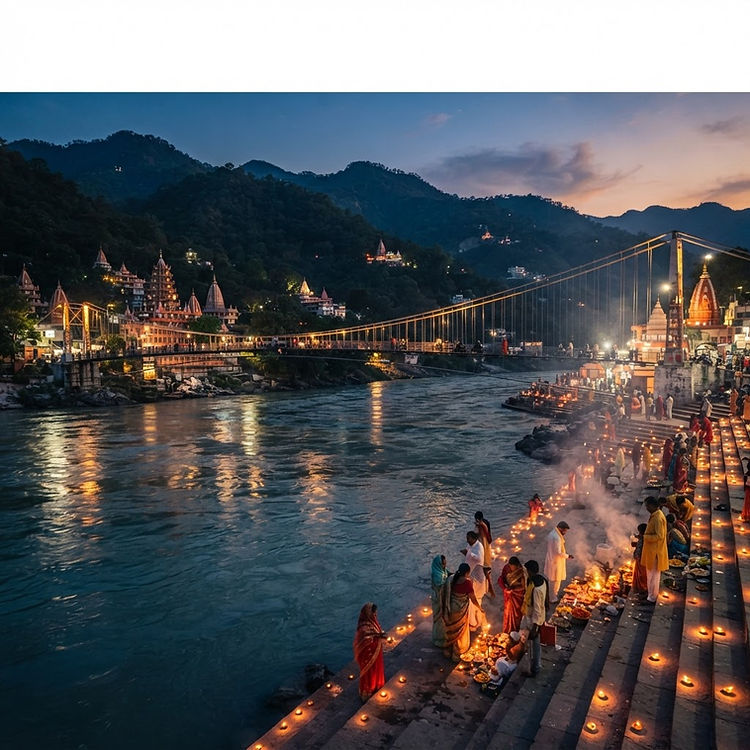
The landscape of Rishikesh is defined by its iconic suspension bridges, specifically Lakshman Jhula and Ram Jhula. These steel constructions are more than transport links; they are essential navigation points that define the flow of movement between the east and west banks of the river. Their presence has allowed for the development of both tourism and local trade, serving as a constant visual reference for anyone navigating the town.
Numerous ashrams located near these bridges serve as significant landmarks, representing the philosophical history of the region. Many of these compounds feature distinct architecture that incorporates open courtyards and large halls intended for collective gathering. These structures remain central to the identity of the place, acting as anchors for the community and for visitors engaged in the study of traditional practices.
These landmarks are positioned to emphasize the transition from the plains to the mountains. By standing at the edge of the Ganges, they frame the intersection of geography and culture. The importance of these sites lies in their enduring role as spaces for quiet gathering, which balances the active nature of the surrounding forest and river environments.
Destinations in this story

Related articles

Exploring The Distinct Neighborhoods Of Cape
Cape Town comprises various districts that offer different experiences, from historic architecture and vibrant streets to modern residential areas and quiet suburban landscapes.
Significant Monuments Of The Cape Peninsula
Key monuments across Cape Town represent the complex historical trajectory of the city, serving as anchors for understanding both colonial impact and political change.
Planning A Day Around Iconic Attractions
Organizing a day in Cape Town requires balancing natural heights and maritime history, allowing enough transition time between mountain views and the bustling waterfront.