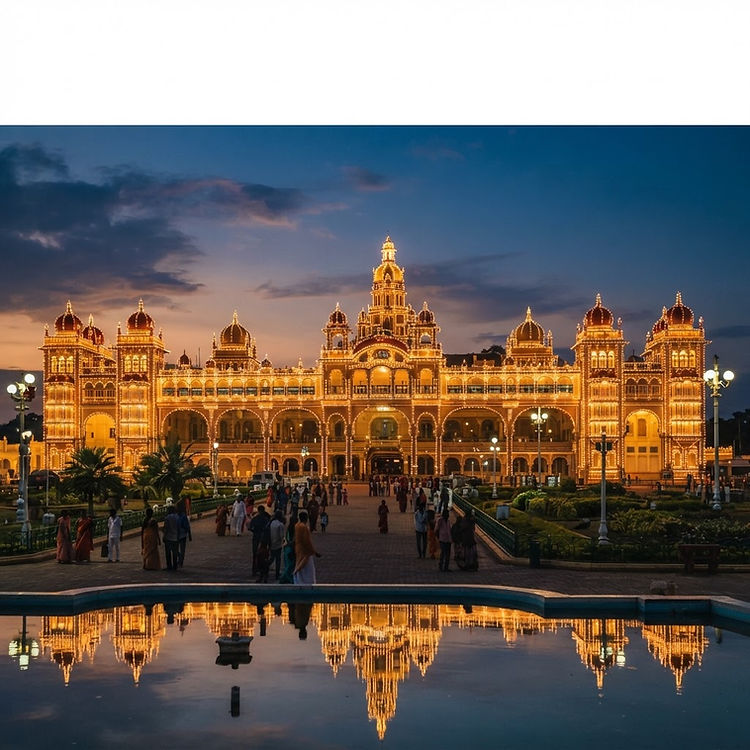
The Amba Vilas Palace stands as the primary landmark, representing the architectural zenith of the Wodeyar era. Its blend of Indo-Saracenic styles, featuring domes, arches, and ornate interiors, serves as a testament to the patronage of the arts. The monument is central to the city ceremonial life and remains a focal point for public observation.
Chamundi Hill, overlooking the city, holds equal importance due to its historical and spiritual significance. The temple dedicated to Goddess Chamundeshwari attracts visitors who seek views of the plateau. This landmark acts as a physical anchor for the region, grounding the urban expansion within the natural geography of the Nilgiri foothills. Its presence informs the layout of the city below.
Other notable sites, such as the Jaganmohan Palace, contribute to the cohesive architectural language of the city. These monuments matter because they preserve a record of the shifting political and cultural priorities over time. By maintaining these structures, the city honors its heritage, providing a tangible connection between current inhabitants and the royal history that shaped the development of the plateau.
Destinations in this story

Related articles

Exploring The Distinct Neighborhoods Of Cape
Cape Town comprises various districts that offer different experiences, from historic architecture and vibrant streets to modern residential areas and quiet suburban landscapes.
Significant Monuments Of The Cape Peninsula
Key monuments across Cape Town represent the complex historical trajectory of the city, serving as anchors for understanding both colonial impact and political change.
Planning A Day Around Iconic Attractions
Organizing a day in Cape Town requires balancing natural heights and maritime history, allowing enough transition time between mountain views and the bustling waterfront.