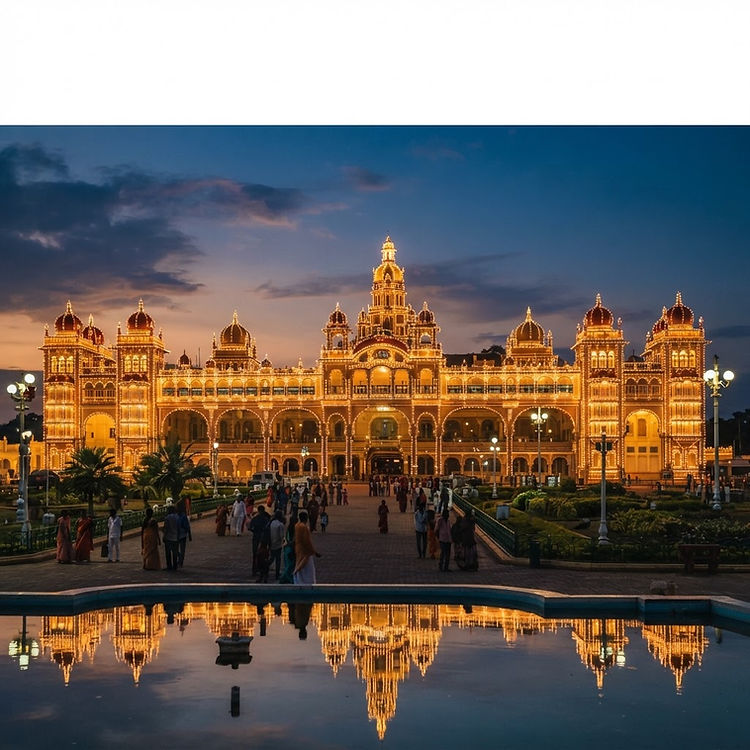
The history of Mysuru is inextricably linked to the Wodeyar dynasty, which governed the region for centuries. Establishing the city as a prominent seat of power, the rulers transformed the landscape through the construction of irrigation systems and grand civic structures. The city served as a pivotal center for arts and education, shaping the social fabric of the plateau.
Key turning points occurred during the periods of Hyder Ali and Tipu Sultan, who expanded the city influence across the southern Indian peninsula. Their administrative and military reforms integrated Mysuru into broader geopolitical networks, leaving a legacy of fortifications and strategic planning that remains visible in the peripheral areas of the modern city.
Today, the past exerts a tangible influence on the urban layout, characterized by broad avenues and ceremonial spaces. The preservation of royal traditions alongside modern academic growth ensures that the city maintains a distinct identity. Visitors navigate streets that retain the methodical planning of previous eras, reflecting a harmonious blend of historical governance and contemporary life.
Destinations in this story

Related articles

Exploring The Distinct Neighborhoods Of Cape
Cape Town comprises various districts that offer different experiences, from historic architecture and vibrant streets to modern residential areas and quiet suburban landscapes.
Significant Monuments Of The Cape Peninsula
Key monuments across Cape Town represent the complex historical trajectory of the city, serving as anchors for understanding both colonial impact and political change.
Planning A Day Around Iconic Attractions
Organizing a day in Cape Town requires balancing natural heights and maritime history, allowing enough transition time between mountain views and the bustling waterfront.