
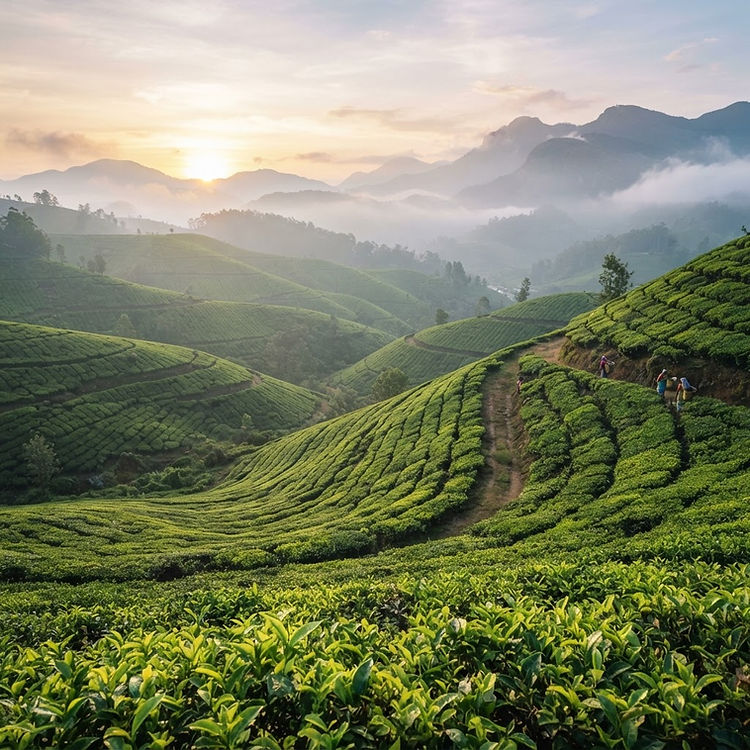
The history of Munnar is intrinsically linked to the colonial era, beginning in the late 19th century when British planters identified the region as suitable for tea cultivation. Prior to this, the area was sparsely populated, consisting largely of dense forests and grasslands. The arrival of the North Travancore Land Planting and Agricultural Society marked a significant turning point, leading to the systematic clearance of forests to establish extensive plantations. This period of development brought modern infrastructure to the high ranges, shaping the spatial orientation of the settlement.
Following India's independence, the tea estates transitioned into the management of large corporations, yet the structural legacy remains visible in the architecture of colonial bungalows and estate offices. These buildings often retain their original design, serving as tangible reminders of the period when Munnar became a prominent center for commercial tea production. The historical layout continues to influence modern development, as the town maintains a strong connection to its planting roots.
The influence of this colonial past persists in the social and economic fabric of the region. The tea estates continue to dominate the landscape, providing a context for the town's growth while preserving the historical continuity of the highlands. Tourists frequently visit these areas to observe the remnants of the early plantation days, which remain integral to the town's identity and its functioning within the broader Western Ghats environment.
Destinations in this story

Related articles


Exploring The Distinct Neighborhoods Of Cape
Cape Town comprises various districts that offer different experiences, from historic architecture and vibrant streets to modern residential areas and quiet suburban landscapes.
Significant Monuments Of The Cape Peninsula
Key monuments across Cape Town represent the complex historical trajectory of the city, serving as anchors for understanding both colonial impact and political change.
Planning A Day Around Iconic Attractions
Organizing a day in Cape Town requires balancing natural heights and maritime history, allowing enough transition time between mountain views and the bustling waterfront.