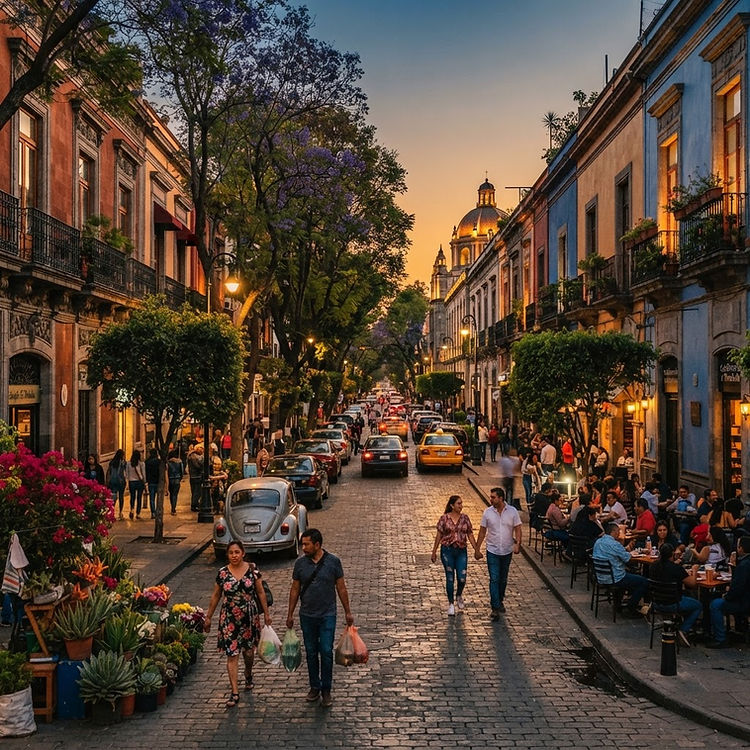
The Angel of Independence stands as a prominent monument along the central thoroughfares, symbolizing national autonomy. Its location provides a reference point for the city center and serves as a site for public gatherings. Other monuments distributed throughout the city honor historical figures, reflecting the evolution of the national narrative over several centuries.
In the central plaza, the Metropolitan Cathedral represents colonial architecture and religious history. Its construction took place over several centuries, incorporating different design styles that mark the passage of time. The National Palace nearby houses murals that depict the social and political history of the region, acting as a visual archive of national events for all visitors.
These landmarks act as anchors within the complex urban environment. Their placement often dictates traffic flow and local orientation. By preserving these structures, the city maintains a visual connection to its past. They stand as representative examples of the diverse influences that have shaped the capital, from colonial administration to post-revolutionary architectural developments.
Destinations in this story

Related articles

Exploring The Distinct Neighborhoods Of Cape
Cape Town comprises various districts that offer different experiences, from historic architecture and vibrant streets to modern residential areas and quiet suburban landscapes.
Significant Monuments Of The Cape Peninsula
Key monuments across Cape Town represent the complex historical trajectory of the city, serving as anchors for understanding both colonial impact and political change.
Planning A Day Around Iconic Attractions
Organizing a day in Cape Town requires balancing natural heights and maritime history, allowing enough transition time between mountain views and the bustling waterfront.