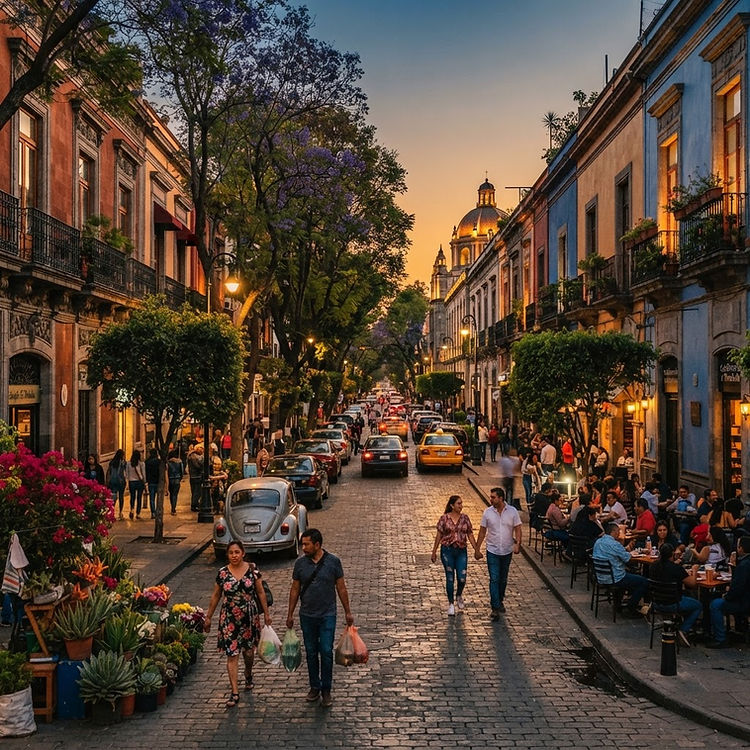
Mexico City rests upon the ruins of Tenochtitlan, the capital of the Aztec Empire. Following the Spanish conquest in the sixteenth century, colonial administrators built stone cathedrals and administrative palaces directly over the remnants of indigenous temples. This practice created a city where distinct historical epochs remain physically intertwined.
Over subsequent centuries, the urban fabric expanded outward, absorbing surrounding towns and incorporating diverse architectural influences. Neoclassical structures from the colonial period sit alongside mid-century modern buildings and contemporary glass towers. The transformation from an island city into a sprawling high-altitude capital reflects changing political landscapes and economic shifts.
Today, historical markers remain visible in the central district. Excavations frequently reveal pre-Hispanic artifacts beneath busy thoroughfares, serving as constant reminders of the past. The urban layout retains elements of the original grid established centuries ago, shaping how residents and visitors navigate the streets. These layers define the character of the modern capital, providing a tangible connection to the civilizations that occupied this valley.
Destinations in this story

Related articles

Exploring The Distinct Neighborhoods Of Cape
Cape Town comprises various districts that offer different experiences, from historic architecture and vibrant streets to modern residential areas and quiet suburban landscapes.
Significant Monuments Of The Cape Peninsula
Key monuments across Cape Town represent the complex historical trajectory of the city, serving as anchors for understanding both colonial impact and political change.
Planning A Day Around Iconic Attractions
Organizing a day in Cape Town requires balancing natural heights and maritime history, allowing enough transition time between mountain views and the bustling waterfront.