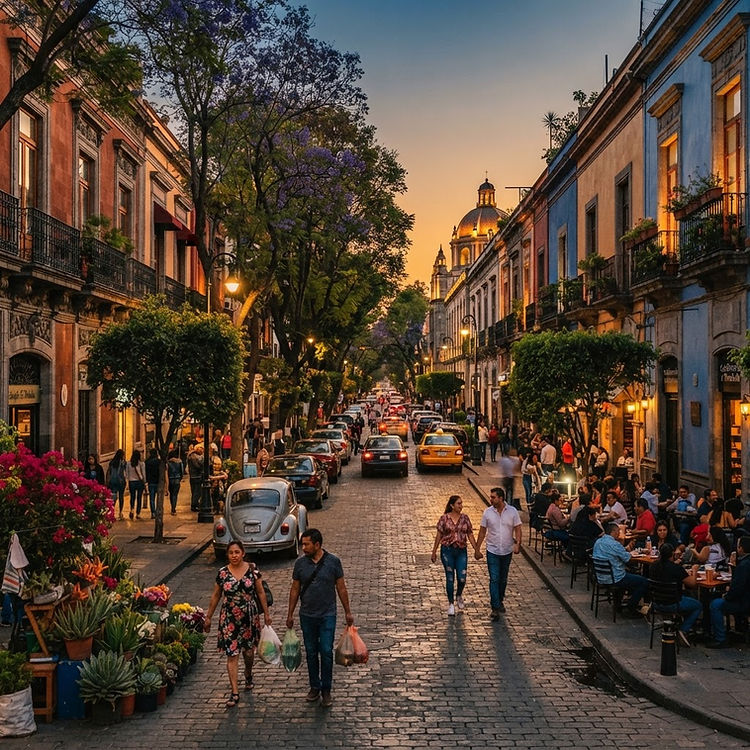
The Centro Historico contains the core of the colonial city, featuring dense street grids and proximity to national monuments. It functions as the administrative and religious heart of the capital. Walking through these streets reveals centuries of architectural change, with commercial activity concentrated in traditional stores and stalls that operate within historic buildings.
Moving west, neighborhoods such as Roma and Condesa are characterized by tree-lined streets, early twentieth-century architecture, and an abundance of residential parks. These districts serve as focal points for local social life, with numerous restaurants and cafes situated on ground floors. The atmosphere here differs from the central core, offering a quieter pace and a focus on neighborhood-level amenities.
Further out, areas like Coyoacan maintain a distinct identity, often described as having a village atmosphere within the city. These diverse districts allow for a varied experience, as each possesses its own rhythm and focus. Navigating between these areas provides a perspective on the scale and evolution of the city as it grew across the valley.
Destinations in this story

Related articles

Exploring The Distinct Neighborhoods Of Cape
Cape Town comprises various districts that offer different experiences, from historic architecture and vibrant streets to modern residential areas and quiet suburban landscapes.
Significant Monuments Of The Cape Peninsula
Key monuments across Cape Town represent the complex historical trajectory of the city, serving as anchors for understanding both colonial impact and political change.
Planning A Day Around Iconic Attractions
Organizing a day in Cape Town requires balancing natural heights and maritime history, allowing enough transition time between mountain views and the bustling waterfront.