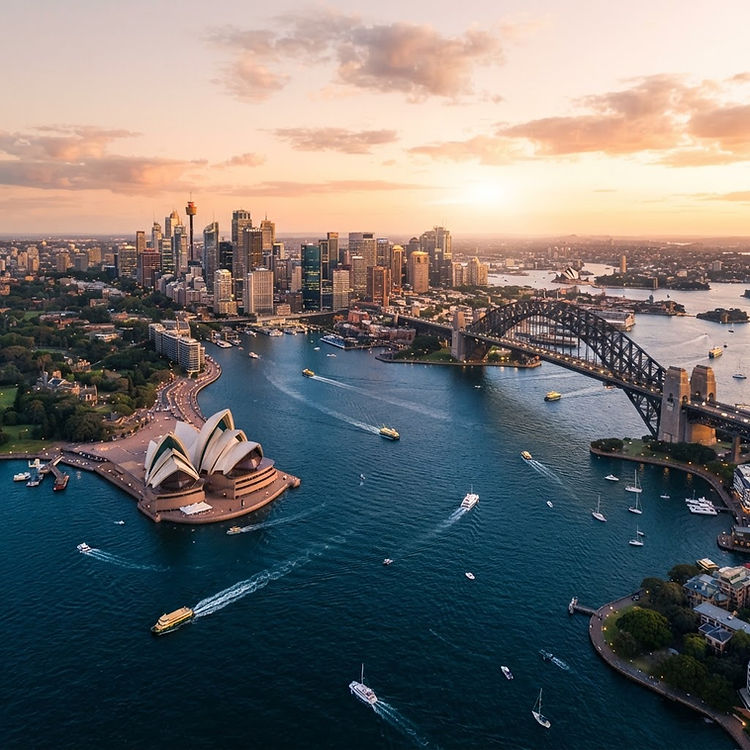
The history of Melbourne traces back to 1835 when settlers established a camp on the Yarra River. The rapid discovery of gold in the mid-nineteenth century propelled the town into an era of immense wealth and development. This period of prosperity left behind a collection of grand Victorian buildings that define the skyline today. The city grid, designed by Robert Hoddle, remains the foundation for modern life, ensuring the early urban planning continues to influence movement across the center.
Industrial expansion and waves of migration during the twentieth century diversified the city, introducing international influences that shaped contemporary society. These layers of history are visible in the contrast between heritage facades and modern urban design. The preservation of historical sites ensures that the city maintains a connection to its past while accommodating growth.
Today, the legacy of this development is evident in the preserved Victorian architecture and the preserved street patterns. The city functions as a bridge between its colonial origins and its identity as a contemporary cultural capital, showing how strategic planning can guide a city through centuries of change.
Destinations in this story

Related articles

Exploring The Distinct Neighborhoods Of Cape
Cape Town comprises various districts that offer different experiences, from historic architecture and vibrant streets to modern residential areas and quiet suburban landscapes.
Significant Monuments Of The Cape Peninsula
Key monuments across Cape Town represent the complex historical trajectory of the city, serving as anchors for understanding both colonial impact and political change.
Planning A Day Around Iconic Attractions
Organizing a day in Cape Town requires balancing natural heights and maritime history, allowing enough transition time between mountain views and the bustling waterfront.