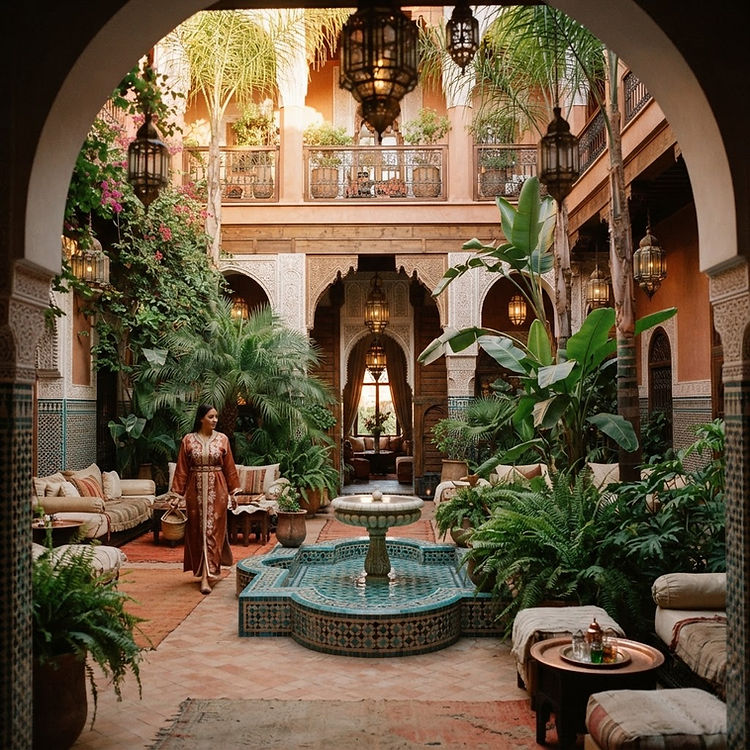
A day in Marrakech typically begins in the central medina, where the proximity of key attractions allows for exploration on foot. Starting at the large public square ensures an experience of the city when activity levels are lower. From here, visitors can move toward the religious and architectural highlights located within a short distance, keeping transitions brief to allow for more time spent at each site.
Midday heat often dictates a change in pace, making it an ideal time to visit sheltered garden environments or shaded museums. These locations offer a pause from the outdoor activity, providing a transition between the morning site visits and the late afternoon atmosphere. Planning a route that follows a circular path through the medina helps minimize backtracking through the dense network of lanes.
Returning toward the central square in the evening allows for an observation of the transformation of the city as lights emerge. This structured approach respects the geography of the walled district while providing enough flexibility to account for the unique character of different sites. Focus on grouping visits geographically to conserve energy for the longer walks often required when navigating the older city sectors.
Destinations in this story

Related articles

Exploring The Distinct Neighborhoods Of Cape
Cape Town comprises various districts that offer different experiences, from historic architecture and vibrant streets to modern residential areas and quiet suburban landscapes.
Significant Monuments Of The Cape Peninsula
Key monuments across Cape Town represent the complex historical trajectory of the city, serving as anchors for understanding both colonial impact and political change.
Planning A Day Around Iconic Attractions
Organizing a day in Cape Town requires balancing natural heights and maritime history, allowing enough transition time between mountain views and the bustling waterfront.