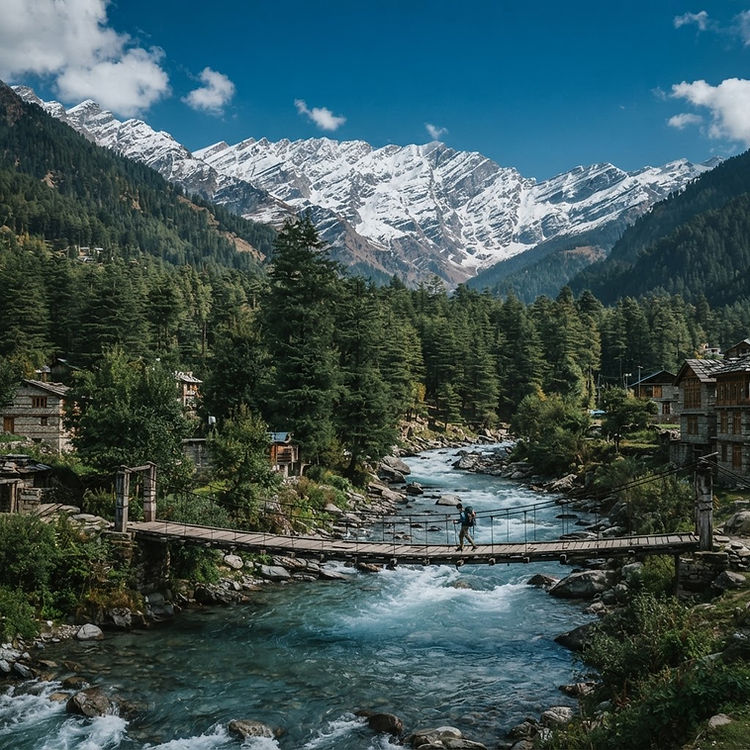
The Hidimba Devi Temple remains the most significant landmark, acting as a historical anchor for the town. Built in a distinct pagoda style using stone and deodar wood, it sits at the edge of the Van Vihar park. Its importance lies in its dedication to a central figure in local mythology and its architectural preservation, which contrasts with the modern residential developments that have expanded around it over the decades.
Another key site is the Manu Temple located in the older part of the town. It is regarded as the site where the sage Manu lived and meditated. While smaller in scale, its location on a hillside provides a vantage point over the valley and serves as a testament to the spiritual continuity of the region. The structure is integrated into the steep terrain, reflecting traditional construction techniques.
These landmarks are vital because they bridge the gap between the natural environment and the human history of the valley. They are not merely tourist sites but serve as cultural identifiers that remind residents and visitors alike of the traditions that have sustained this community through periods of change and increased connectivity.
Destinations in this story

Related articles

Exploring The Distinct Neighborhoods Of Cape
Cape Town comprises various districts that offer different experiences, from historic architecture and vibrant streets to modern residential areas and quiet suburban landscapes.
Significant Monuments Of The Cape Peninsula
Key monuments across Cape Town represent the complex historical trajectory of the city, serving as anchors for understanding both colonial impact and political change.
Planning A Day Around Iconic Attractions
Organizing a day in Cape Town requires balancing natural heights and maritime history, allowing enough transition time between mountain views and the bustling waterfront.