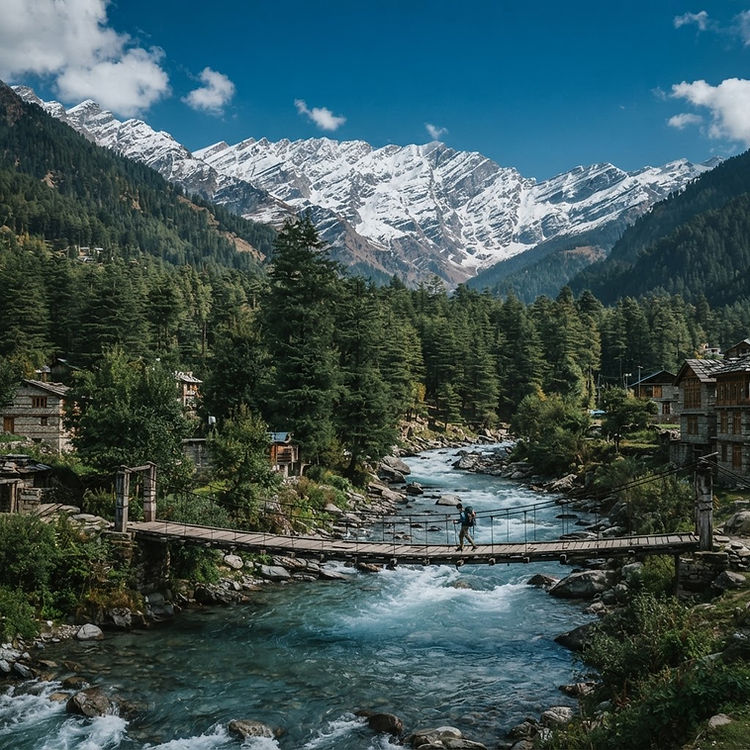
The history of Manali is deeply intertwined with the legend of Sage Manu, who is said to have stepped off his ark in this valley to recreate human life. This foundational myth gives the town its name, Manu-Alaya, serving as a spiritual anchor for the region. Over centuries, the valley was governed by various local chiefs and the rulers of the Kullu kingdom, who maintained relative autonomy within the Himalayan landscape.
During the British colonial period, the town underwent a significant transformation as administrators discovered its potential as a summer retreat. The introduction of apple orchards by early settlers fundamentally changed the local economy and agricultural landscape, laying the groundwork for the town's modern character. This colonial influence remains visible in the architectural style of older buildings and the layout of the initial settlement area.
Today, these historical layers manifest in the coexistence of traditional wooden temples and colonial-era cottages. The past continues to shape the streets, as the quiet lanes of Old Manali reflect a heritage that values seclusion and integration with the surrounding cedar forests and mountain slopes.
Destinations in this story

Related articles

Exploring The Distinct Neighborhoods Of Cape
Cape Town comprises various districts that offer different experiences, from historic architecture and vibrant streets to modern residential areas and quiet suburban landscapes.
Significant Monuments Of The Cape Peninsula
Key monuments across Cape Town represent the complex historical trajectory of the city, serving as anchors for understanding both colonial impact and political change.
Planning A Day Around Iconic Attractions
Organizing a day in Cape Town requires balancing natural heights and maritime history, allowing enough transition time between mountain views and the bustling waterfront.