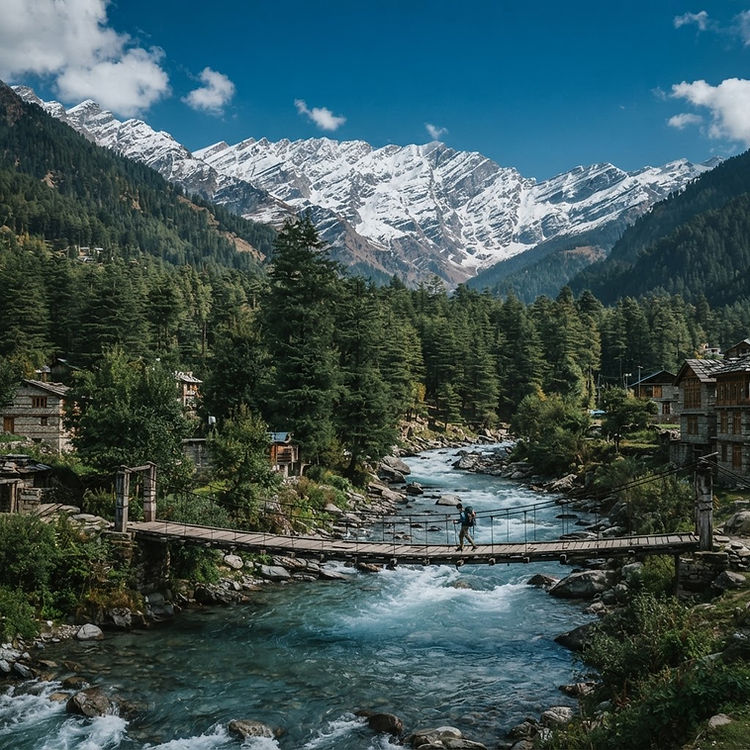
The layout of Manali creates a clear distinction between the commercial center and the quieter, more traditional neighborhoods. New Manali acts as the primary hub, where hotels, transit points, and shops are concentrated. This area is characterized by constant activity and serves as the main gateway for those arriving by road. It is a practical base for accessing regional transport services and essential supplies.
Old Manali offers a different experience, situated across the Manalsu River. This district is known for its winding lanes, traditional stone and wood houses, and proximity to apple orchards. The pace here is noticeably slower, and the neighborhood feels more connected to the surrounding mountain landscape. It is a preferred area for those seeking a quiet environment and proximity to natural hiking trails.
Vashisht, located on the hillside, maintains a distinct character focused on its temple and thermal springs. The streets are narrow and steep, housing a community that has historically centered its social life around the water sources. Spending time here provides insight into the village life that persists despite the town's growth as a major transit and tourist destination in the Himalayas.
Destinations in this story

Related articles

Exploring The Distinct Neighborhoods Of Cape
Cape Town comprises various districts that offer different experiences, from historic architecture and vibrant streets to modern residential areas and quiet suburban landscapes.
Significant Monuments Of The Cape Peninsula
Key monuments across Cape Town represent the complex historical trajectory of the city, serving as anchors for understanding both colonial impact and political change.
Planning A Day Around Iconic Attractions
Organizing a day in Cape Town requires balancing natural heights and maritime history, allowing enough transition time between mountain views and the bustling waterfront.