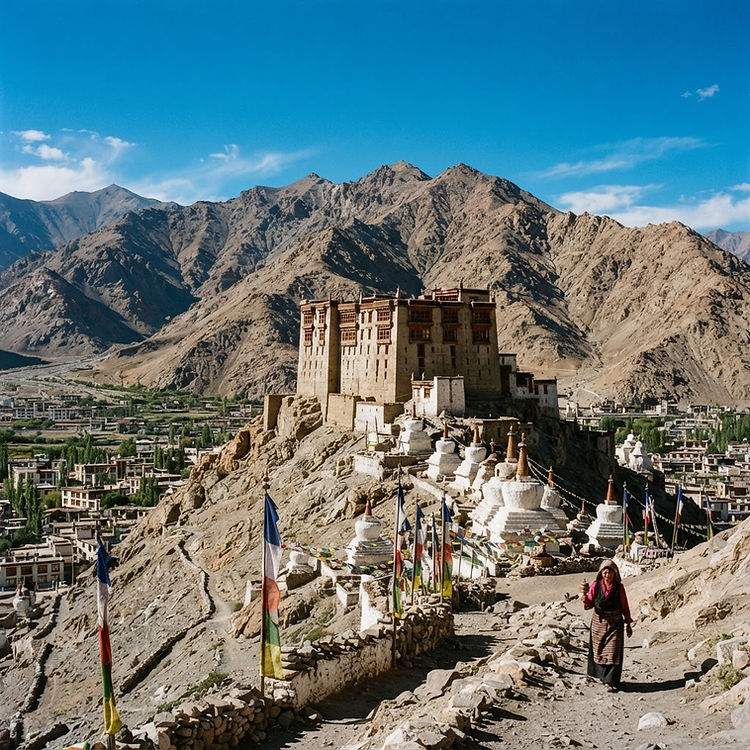
The Leh Palace stands as a prominent landmark, mirroring the design of the Potala Palace in Lhasa. Its nine-story structure was constructed from wood and stone, overlooking the valley floor. It serves as a visual record of the Namgyal dynasty, symbolizing the royal authority that historically governed the trade routes. The building remains a central focus of the town's skyline, preserved as a symbol of regional heritage.
Beyond the palace, the Shanti Stupa is a significant monument established to promote peace and Buddhist philosophy. Situated on a hilltop, it offers a distinct vantage point for observing the surrounding mountains. The structure features intricate reliefs and follows traditional architectural guidelines, functioning as a space for contemplation and reflection for residents and visitors alike, emphasizing the spiritual foundations of the local society.
These landmarks are interconnected by history and purpose, representing the fusion of political and religious power. They are maintained to reflect the enduring nature of the local culture, providing necessary orientation in an expansive landscape where human construction is defined by the scale of the environment.
Destinations in this story

Related articles

Exploring The Distinct Neighborhoods Of Cape
Cape Town comprises various districts that offer different experiences, from historic architecture and vibrant streets to modern residential areas and quiet suburban landscapes.
Significant Monuments Of The Cape Peninsula
Key monuments across Cape Town represent the complex historical trajectory of the city, serving as anchors for understanding both colonial impact and political change.
Planning A Day Around Iconic Attractions
Organizing a day in Cape Town requires balancing natural heights and maritime history, allowing enough transition time between mountain views and the bustling waterfront.