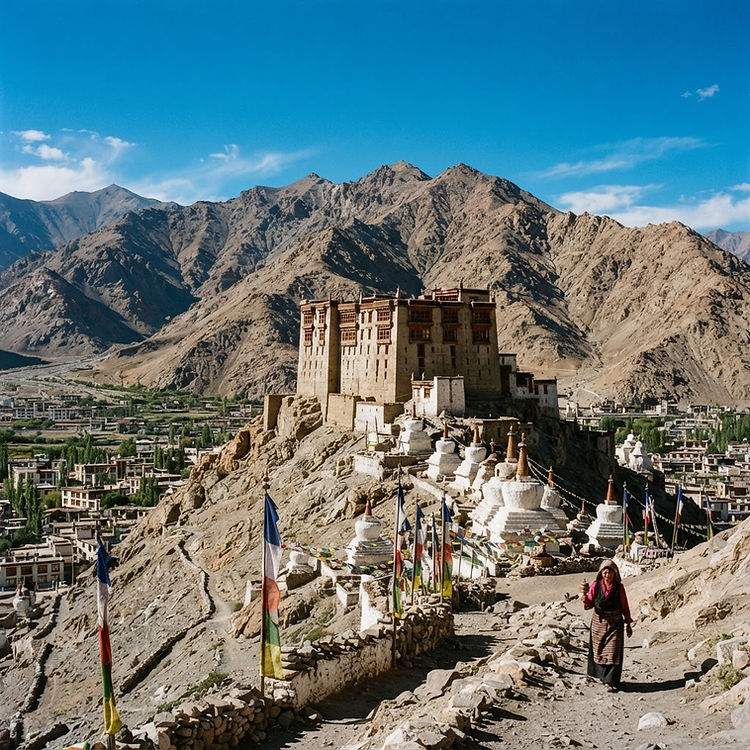
Leh emerged as the capital of the Kingdom of Ladakh during the seventeenth century under King Sengge Namgyal. This period marked a consolidation of power as the region became a bustling center for trade connecting India with Central Asia. Merchants traversing the Silk Road brought diverse influences to this high-altitude settlement, fostering a unique blend of Buddhist and regional traditions that defined the social structure of the town.
The subsequent integration into the Dogra kingdom during the nineteenth century introduced new administrative changes while preserving the distinct cultural identity of the area. This historical transition helped solidify the strategic importance of Leh as a gateway to the broader Trans-Himalayan region. Local leaders maintained significant influence, ensuring that religious and royal lineages remained respected pillars of the community.
Today, the remnants of this past are found in the labyrinthine alleys and the imposing palace structures overlooking the modern bazaar. Traditional earthen homes sit alongside religious sites, reflecting a landscape where history is continuously inhabited. The architecture serves as a silent testament to centuries of endurance amidst the harsh climate.
Destinations in this story

Related articles

Exploring The Distinct Neighborhoods Of Cape
Cape Town comprises various districts that offer different experiences, from historic architecture and vibrant streets to modern residential areas and quiet suburban landscapes.
Significant Monuments Of The Cape Peninsula
Key monuments across Cape Town represent the complex historical trajectory of the city, serving as anchors for understanding both colonial impact and political change.
Planning A Day Around Iconic Attractions
Organizing a day in Cape Town requires balancing natural heights and maritime history, allowing enough transition time between mountain views and the bustling waterfront.