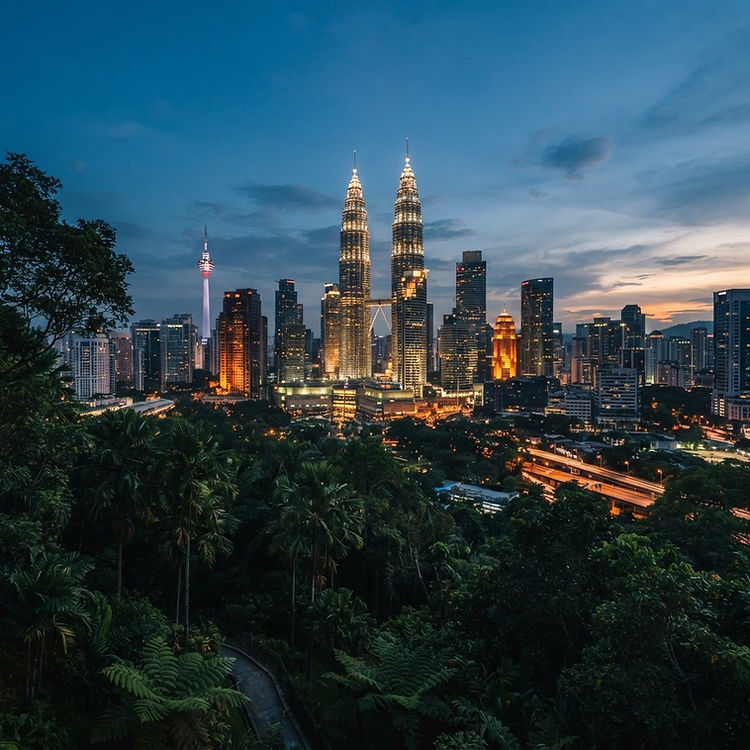
The skyline of Kuala Lumpur is dominated by a collection of structures that represent distinct chapters of national development. The iconic towers, connected by an elevated skybridge, function as the primary symbol of the city's modern identity. These landmarks are engineered to reflect local motifs in their facade, creating a visual bridge between traditional cultural patterns and late twentieth-century glass and steel construction.
Historical monuments also maintain prominence, particularly those displaying influences from Islamic architecture and British design. The Sultan Abdul Samad Building, with its copper domes and clock tower, serves as a testament to the early administrative history of the region. Nearby mosques and colonial-era railway stations further contribute to the dense assembly of structural heritage that residents and visitors identify as central to the city identity.
These landmarks are strategically placed to define the urban core. Their presence acts as a permanent reference point for navigation and city planning. By preserving these monuments, the city maintains a visible connection to its developmental timeline, ensuring that the architectural character of the capital remains rooted in its varied historical origins.
Destinations in this story

Related articles

Exploring The Distinct Neighborhoods Of Cape
Cape Town comprises various districts that offer different experiences, from historic architecture and vibrant streets to modern residential areas and quiet suburban landscapes.
Significant Monuments Of The Cape Peninsula
Key monuments across Cape Town represent the complex historical trajectory of the city, serving as anchors for understanding both colonial impact and political change.
Planning A Day Around Iconic Attractions
Organizing a day in Cape Town requires balancing natural heights and maritime history, allowing enough transition time between mountain views and the bustling waterfront.