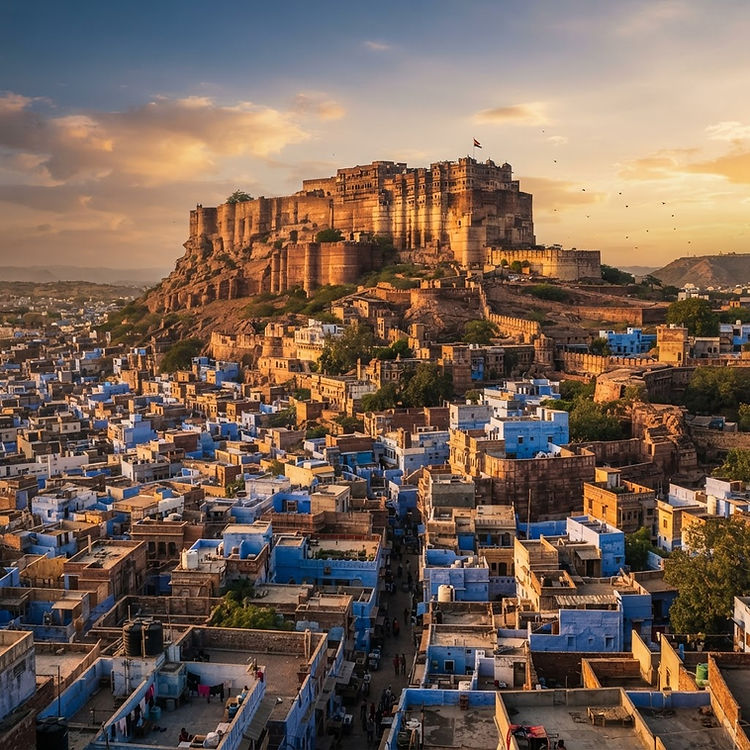
Founded in 1459 by Rao Jodha, a chief of the Rathore clan, Jodhpur grew from its strategic location in the Thar Desert. The city was established as the new capital of Marwar following the decline of Mandore. Its development was marked by the construction of the formidable Mehrangarh Fort, which served as a central defensive point for the state against various regional empires throughout the centuries.
The city became a major hub for trade routes between Central Asia and the Indian plains. This historical wealth allowed for the creation of intricate palaces and temples that define the urban layout today. The transition of power during the colonial era integrated the city into the broader political landscape of British India while maintaining its local sovereignty.
Today, the historical influence remains visible in the narrow winding streets of the old city and the traditional blue-washed houses. These architectural choices continue to define the identity of the historic quarter, reflecting the preservation of cultural heritage and the endurance of Marwari customs within the modern urban environment.
Destinations in this story

Related articles

Exploring The Distinct Neighborhoods Of Cape
Cape Town comprises various districts that offer different experiences, from historic architecture and vibrant streets to modern residential areas and quiet suburban landscapes.
Significant Monuments Of The Cape Peninsula
Key monuments across Cape Town represent the complex historical trajectory of the city, serving as anchors for understanding both colonial impact and political change.
Planning A Day Around Iconic Attractions
Organizing a day in Cape Town requires balancing natural heights and maritime history, allowing enough transition time between mountain views and the bustling waterfront.