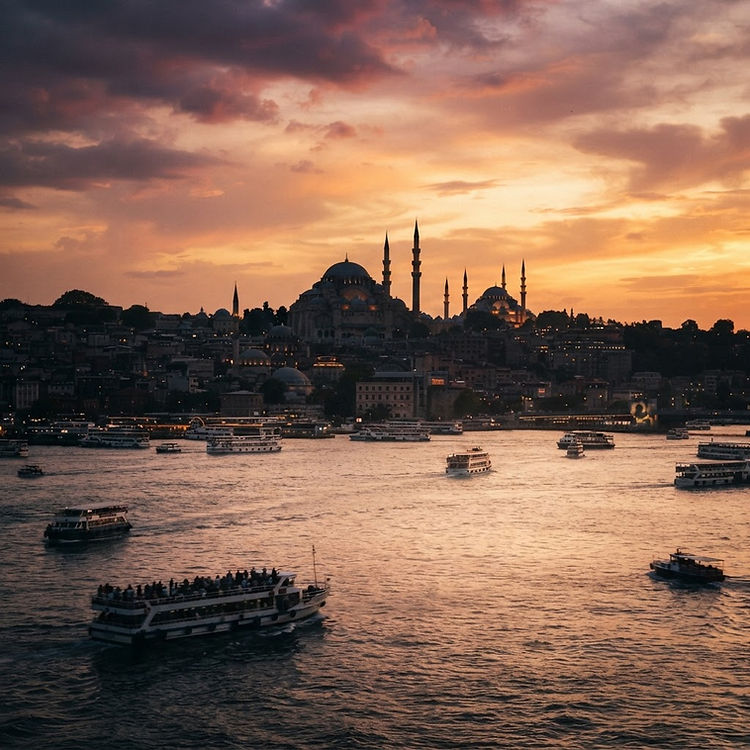
The history of Istanbul is defined by its strategic position between Europe and Asia. Founded as Byzantium and later renamed Constantinople, the city served as the capital for both the Byzantine and Ottoman empires. These successive civilizations left an architectural footprint that remains visible across the historic peninsula today.
Following the Ottoman conquest in 1453, the city underwent significant transformation under sultans who commissioned vast mosques and palaces. The integration of Roman foundations with Islamic architectural styles established the distinct visual character of the skyline. You can observe layers of history where ancient cisterns sit beneath Ottoman-era stone structures.
Today, the past shapes the streets through the preservation of historic quarters and grand monuments. The blend of influences is not confined to museums but is embedded in the layout of the city. Walking through the older districts provides a tangible connection to the centuries of geopolitical change that defined the current landscape of the Turkish Republic.
Destinations in this story

Related articles

Exploring The Distinct Neighborhoods Of Cape
Cape Town comprises various districts that offer different experiences, from historic architecture and vibrant streets to modern residential areas and quiet suburban landscapes.
Significant Monuments Of The Cape Peninsula
Key monuments across Cape Town represent the complex historical trajectory of the city, serving as anchors for understanding both colonial impact and political change.
Planning A Day Around Iconic Attractions
Organizing a day in Cape Town requires balancing natural heights and maritime history, allowing enough transition time between mountain views and the bustling waterfront.