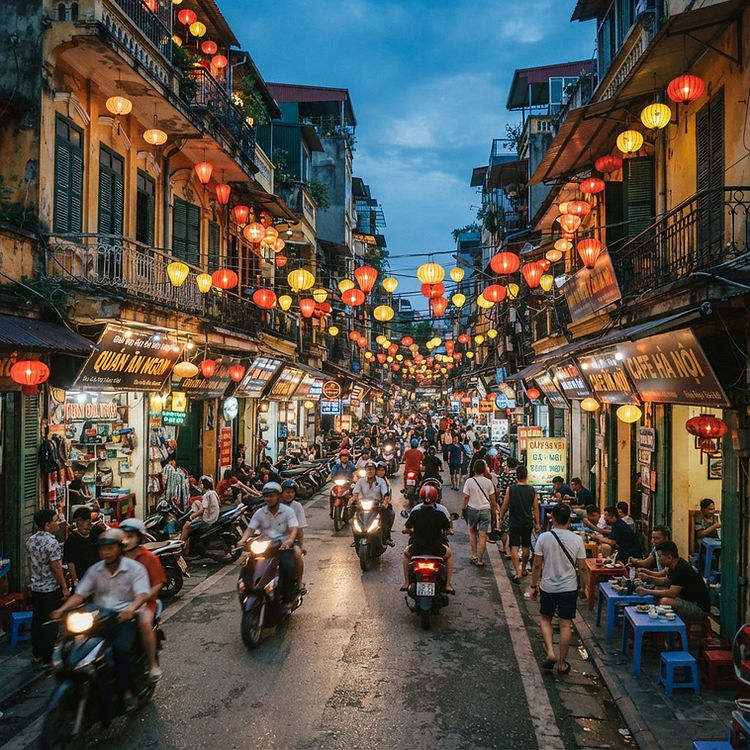
Founded as Thang Long in 1010, Hanoi served as the political center for successive Vietnamese dynasties for centuries. The influence of the Ly and Tran periods remains visible in the Temple of Literature, which stands as a testament to the city commitment to scholarly pursuit. These ancient structures contrast with the urban fabric shaped by later centuries of regional governance and local development.
The nineteenth century brought French colonial administration, which transformed the city landscape with wide boulevards and neoclassical government buildings. This era layered European design onto the existing maze of the Old Quarter, creating a dualistic urban structure. The city eventually became the capital of a unified nation, cementing its role as the cultural heart of the country.
Today, the past lives on through the preservation of historic monuments and the enduring layout of the central districts. Visitors can trace these periods by moving between the quiet courtyards of the past and the bustling streets that hold the weight of national history within their walls.
Destinations in this story

Related articles

Exploring The Distinct Neighborhoods Of Cape
Cape Town comprises various districts that offer different experiences, from historic architecture and vibrant streets to modern residential areas and quiet suburban landscapes.
Significant Monuments Of The Cape Peninsula
Key monuments across Cape Town represent the complex historical trajectory of the city, serving as anchors for understanding both colonial impact and political change.
Planning A Day Around Iconic Attractions
Organizing a day in Cape Town requires balancing natural heights and maritime history, allowing enough transition time between mountain views and the bustling waterfront.