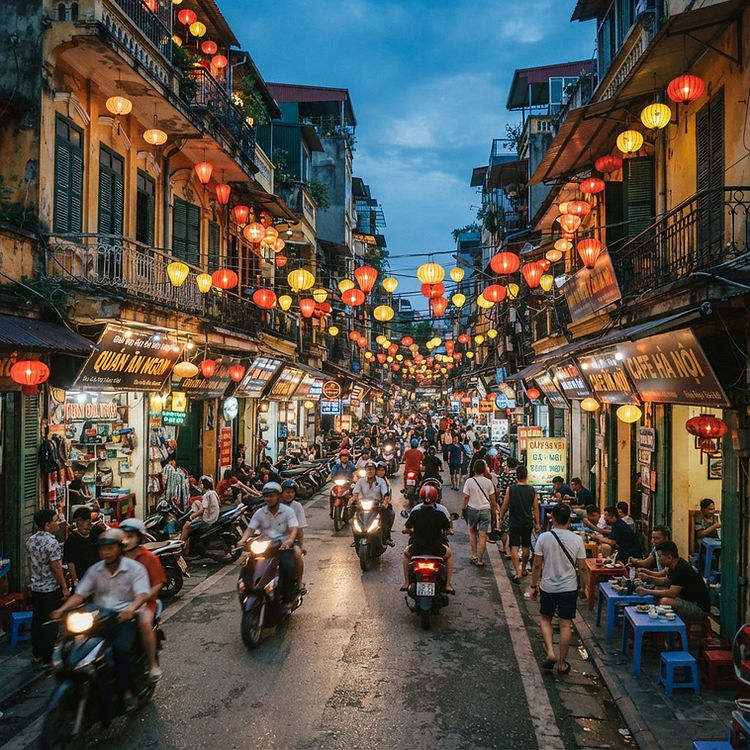
The Old Quarter is the most recognizable district, defined by its narrow lanes and centuries-old commercial heritage. Each street historically specialized in a specific craft, a layout that still influences the commercial activity found here today. It is the most walkable part of the city and serves as the primary location for those interested in local trade and historic atmosphere.
South of the lake lies the French Quarter, which features wide, tree-lined streets and solid stone architecture. This area provides a contrast to the density of the north, housing many government offices, embassies, and large hotels. It feels more spacious and serves as a center for professional activity and institutional life within the greater urban landscape.
Further out, Tay Ho offers a different experience near the city largest lake, providing a mix of residential growth and quiet spaces. This district is characterized by a slower pace compared to the inner city, attracting those who seek a balance between proximity to the center and access to waterfront paths. Each neighborhood reveals a different facet of the city character.
Destinations in this story

Related articles

Exploring The Distinct Neighborhoods Of Cape
Cape Town comprises various districts that offer different experiences, from historic architecture and vibrant streets to modern residential areas and quiet suburban landscapes.
Significant Monuments Of The Cape Peninsula
Key monuments across Cape Town represent the complex historical trajectory of the city, serving as anchors for understanding both colonial impact and political change.
Planning A Day Around Iconic Attractions
Organizing a day in Cape Town requires balancing natural heights and maritime history, allowing enough transition time between mountain views and the bustling waterfront.