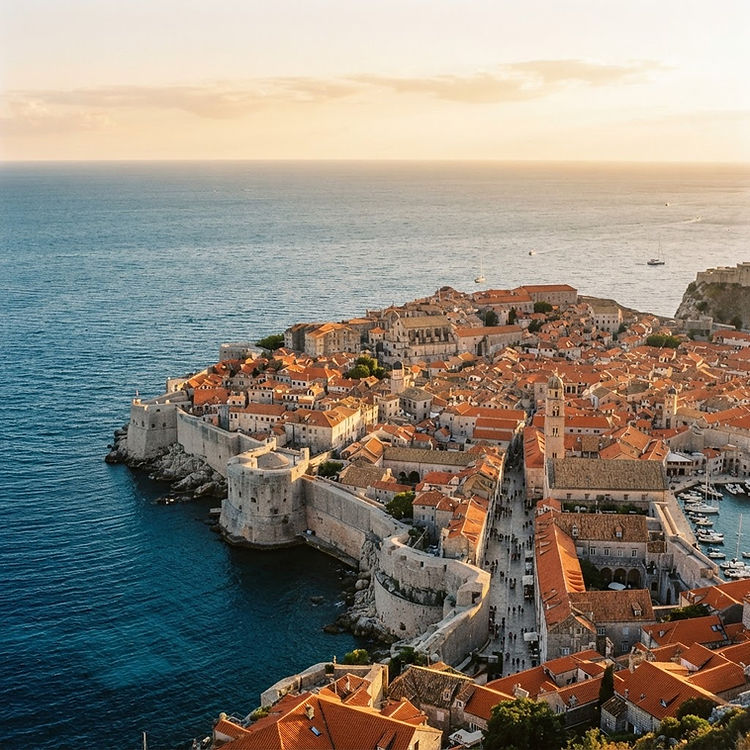
The Old Town, or Grad, serves as the historic core, contained entirely within the defensive walls. It is a dense collection of narrow alleys, churches, and public squares where the majority of civic life has occurred for centuries. While the streets are crowded, the architecture offers a unique look at the traditional limestone masonry that defines the local aesthetic.
Lapad is a primary residential and hotel district located on a peninsula to the west. This area features more open space, parks, and coastal walkways that provide a quieter atmosphere compared to the intense density of the centre. Many residents spend their time here walking along the water or utilizing the local public amenities that are tailored to daily living.
Ploce is the district extending to the east, providing elevated views over the harbour and the island of Lokrum. This area is characterized by villas and gardens, offering a more serene environment. The district serves as an important transit corridor, connecting the port facilities to the main arterial roads that lead toward the surrounding coastline.
Destinations in this story

Related articles

Exploring The Distinct Neighborhoods Of Cape
Cape Town comprises various districts that offer different experiences, from historic architecture and vibrant streets to modern residential areas and quiet suburban landscapes.
Significant Monuments Of The Cape Peninsula
Key monuments across Cape Town represent the complex historical trajectory of the city, serving as anchors for understanding both colonial impact and political change.
Planning A Day Around Iconic Attractions
Organizing a day in Cape Town requires balancing natural heights and maritime history, allowing enough transition time between mountain views and the bustling waterfront.