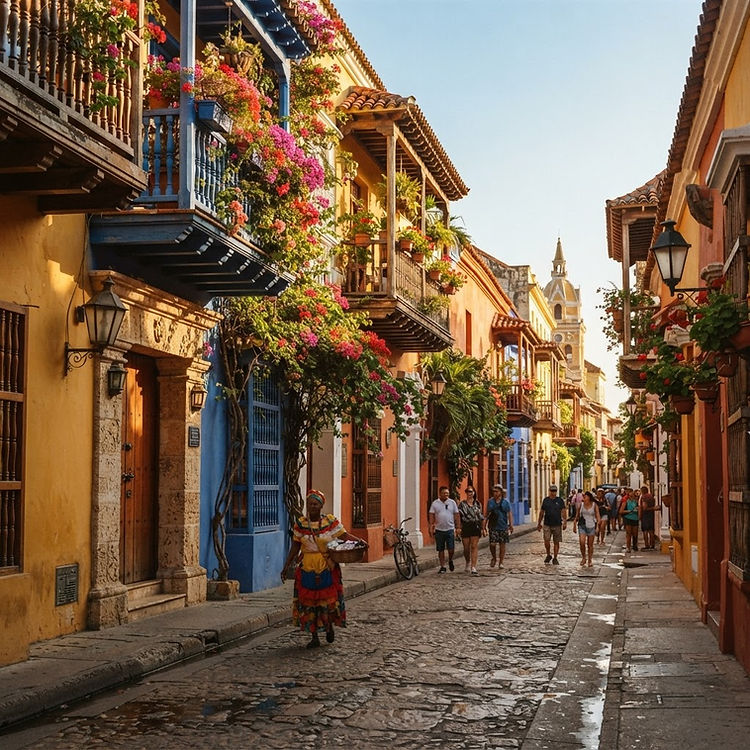
The fortifications of Cartagena represent a significant achievement in military engineering during the colonial era. The wall, known as Las Murallas, surrounds the historic center and remains largely intact, functioning as a boundary between the past and modern expansion. This structure served as the primary defense against naval incursions and remains a central feature of the city skyline.
San Felipe de Barajas Castle is another defining landmark, located on a hill outside the main walls. Its intricate system of tunnels and strategic vantage points demonstrates the complexity of colonial defense tactics. The site is maintained to show how the Spanish military secured the port against external threats throughout the seventeenth and eighteenth centuries.
Other notable landmarks include the Clock Tower gate and the various plazas located within the old town. These structures provide a visual record of the city’s history, marking spaces of governance, religion, and commercial activity. Each site serves as a reference point for understanding the architectural development of the city over the last four hundred years.
Destinations in this story

Related articles

Exploring The Distinct Neighborhoods Of Cape
Cape Town comprises various districts that offer different experiences, from historic architecture and vibrant streets to modern residential areas and quiet suburban landscapes.
Significant Monuments Of The Cape Peninsula
Key monuments across Cape Town represent the complex historical trajectory of the city, serving as anchors for understanding both colonial impact and political change.
Planning A Day Around Iconic Attractions
Organizing a day in Cape Town requires balancing natural heights and maritime history, allowing enough transition time between mountain views and the bustling waterfront.