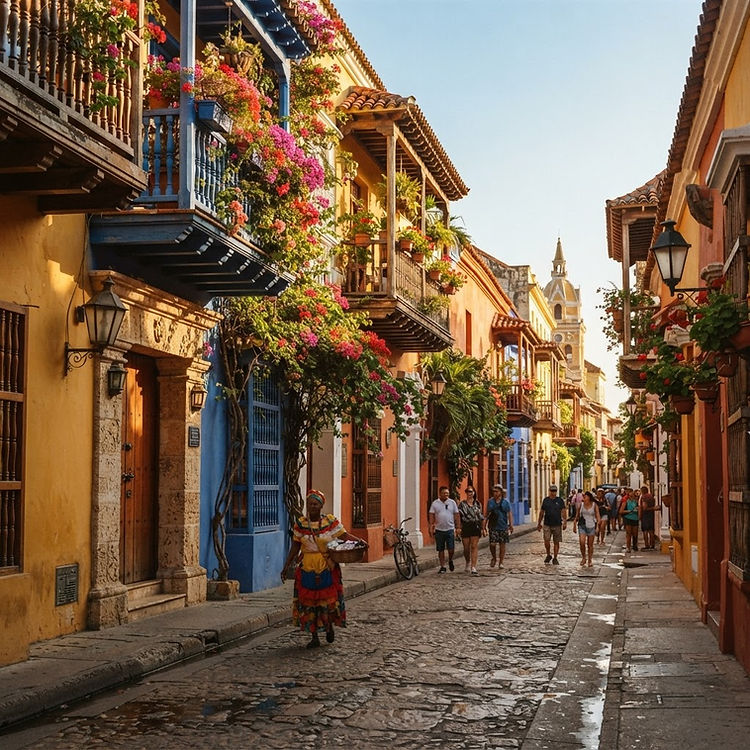
Cartagena was established as a crucial Spanish colonial port in the sixteenth century, serving as a gateway for goods and precious metals heading back to Europe. Its strategic importance attracted significant attention from privateers and competing empires, which led to the construction of an extensive system of defensive walls and forts. These fortifications successfully withstood numerous naval sieges over the centuries, solidifying the city as one of the most protected strongholds in the Americas.
The layout of the walled city reflects this period of colonial development, with narrow grid streets and large public plazas designed to facilitate commerce and government. The influence of this era remains visible in the architecture of the historic center, where stone bastions and colonial facades are maintained to preserve the structural legacy of the empire.
Today, the historical significance of these walls and colonial buildings informs the cultural identity of the area. Visitors walk through the same streets that served as the commercial heart of the Caribbean for three centuries, experiencing a preserved urban landscape that continues to define the modern city.
Destinations in this story

Related articles

Exploring The Distinct Neighborhoods Of Cape
Cape Town comprises various districts that offer different experiences, from historic architecture and vibrant streets to modern residential areas and quiet suburban landscapes.
Significant Monuments Of The Cape Peninsula
Key monuments across Cape Town represent the complex historical trajectory of the city, serving as anchors for understanding both colonial impact and political change.
Planning A Day Around Iconic Attractions
Organizing a day in Cape Town requires balancing natural heights and maritime history, allowing enough transition time between mountain views and the bustling waterfront.