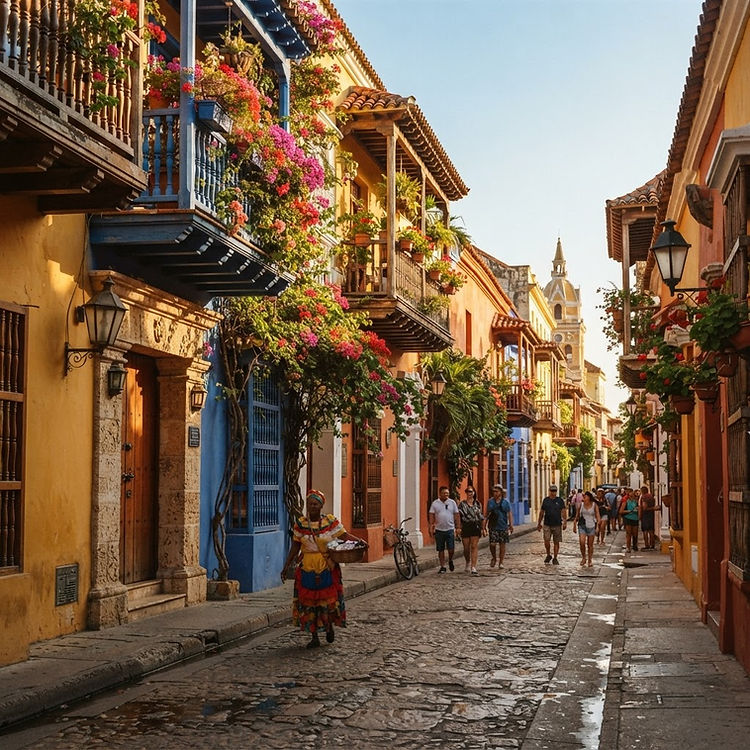
The Walled City is the historic core, characterized by its grid of colonial houses, balconies filled with flowers, and numerous squares. This district houses many of the primary administrative and religious buildings, making it the center of pedestrian activity. It retains a distinct layout that reflects the needs of a colonial port city, with narrow streets designed to offer shade.
Adjacent to the walls lies Getsemani, a district that features a different scale of architecture and a focus on public life. This area is noted for its residential atmosphere and its role as a hub for local art and informal gatherings. The streets here lead to several plazas that function as community spaces throughout the day.
Bocagrande, located on a narrow peninsula, represents the modern expansion of the city. It is defined by high-rise buildings and proximity to the coastline, offering a contrast to the density of the historic center. Each district serves a different purpose, whether for historical observation, local interaction, or access to the beaches that define the Caribbean geography.
Destinations in this story

Related articles

Exploring The Distinct Neighborhoods Of Cape
Cape Town comprises various districts that offer different experiences, from historic architecture and vibrant streets to modern residential areas and quiet suburban landscapes.
Significant Monuments Of The Cape Peninsula
Key monuments across Cape Town represent the complex historical trajectory of the city, serving as anchors for understanding both colonial impact and political change.
Planning A Day Around Iconic Attractions
Organizing a day in Cape Town requires balancing natural heights and maritime history, allowing enough transition time between mountain views and the bustling waterfront.