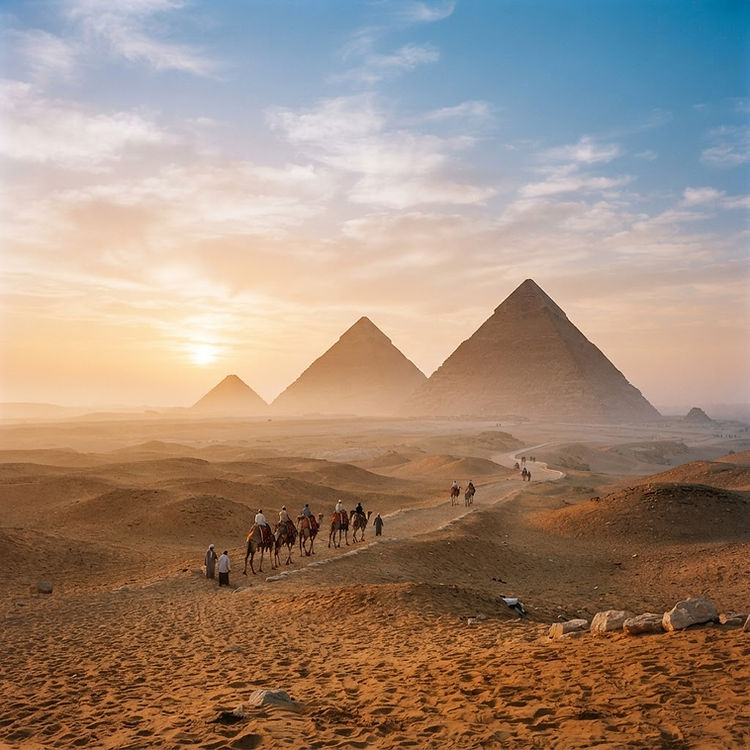
The Giza pyramids stand as the most recognized landmarks in the region, representing the engineering capabilities of the Old Kingdom. These structures are integral to the identity of the plateau and serve as a visual anchor for the western horizon. Their presence has defined the surrounding landscape for millennia, influencing the development of the city as it grew toward the Nile River banks.
Within the city proper, the Citadel of Saladin occupies a prominent position on the Muqattam Hills. Built during the Ayyubid period, this fortification protected the capital and housed successive rulers. The mosques contained within its walls, specifically the Alabaster Mosque, display architectural styles that highlight the transition of design influences through the centuries. Its location offers a vantage point for understanding the sprawling geography of modern Cairo.
Other notable sites include the historic gates of the medieval city, such as Bab al-Futuh and Bab al-Nasr. These monuments define the boundaries of the original walled city and mark the entrance to older residential quarters. Together, these landmarks function as tangible markers of history, allowing residents and visitors to interpret the development of the capital through its physical monuments.
Destinations in this story

Related articles

Exploring The Distinct Neighborhoods Of Cape
Cape Town comprises various districts that offer different experiences, from historic architecture and vibrant streets to modern residential areas and quiet suburban landscapes.
Significant Monuments Of The Cape Peninsula
Key monuments across Cape Town represent the complex historical trajectory of the city, serving as anchors for understanding both colonial impact and political change.
Planning A Day Around Iconic Attractions
Organizing a day in Cape Town requires balancing natural heights and maritime history, allowing enough transition time between mountain views and the bustling waterfront.