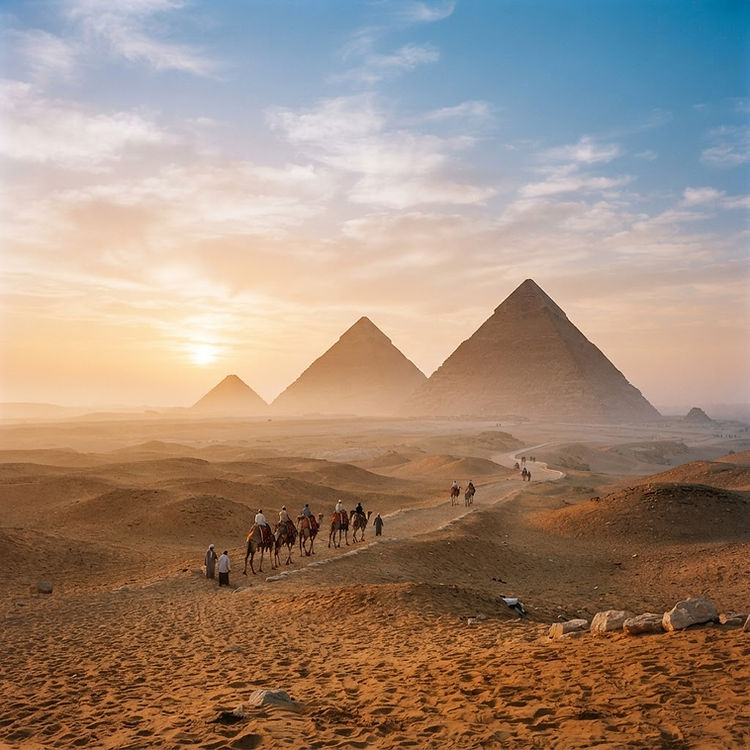
Cairo emerged as a significant center during the Fatimid Caliphate when Jawhar al-Siqilli founded the city in 969 AD. Throughout the medieval period, it flourished under Ayyubid and Mamluk dynasties, becoming a hub for scholars and trade across the Islamic world. The city expanded significantly as grand mosques, madrasas, and defensive walls were constructed to define the urban landscape, creating the dense fabric seen today.
Following the Ottoman conquest, the city experienced varying periods of growth and stagnation. The nineteenth-century modernization projects under Muhammad Ali Pasha transformed central Cairo with wide boulevards and European-style buildings. This architectural layer contrasts sharply with the narrow, winding alleys of Islamic Cairo, illustrating the multiple influences that have shaped the capital over ten centuries of continuous human habitation.
Today, the past remains deeply embedded in the daily life of the city. Ancient street patterns still dictate traffic flow, while historic monuments serve as landmarks for navigation. Residents maintain customs that bridge centuries, ensuring that the legacy of earlier eras informs contemporary social interaction and urban development in this massive metropolis.
Destinations in this story

Related articles

Exploring The Distinct Neighborhoods Of Cape
Cape Town comprises various districts that offer different experiences, from historic architecture and vibrant streets to modern residential areas and quiet suburban landscapes.
Significant Monuments Of The Cape Peninsula
Key monuments across Cape Town represent the complex historical trajectory of the city, serving as anchors for understanding both colonial impact and political change.
Planning A Day Around Iconic Attractions
Organizing a day in Cape Town requires balancing natural heights and maritime history, allowing enough transition time between mountain views and the bustling waterfront.