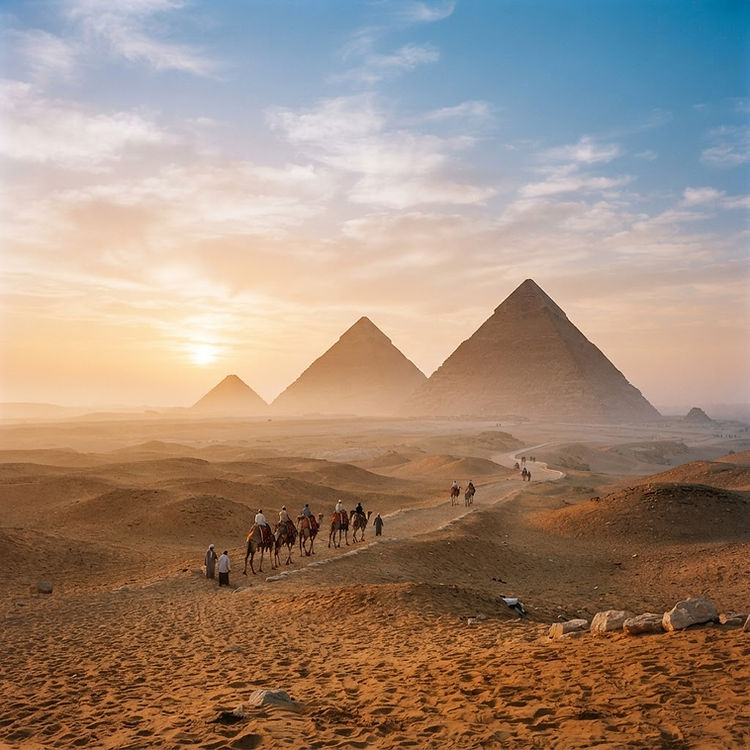
Effective planning for a day in Cairo requires starting early to navigate the distances between major sites. The Giza Plateau holds the pyramids and the Great Sphinx, which are situated on the western edge of the city. Allocating significant time here allows for a thorough observation of these structures before the heat of midday, when foot traffic often increases and the site becomes more crowded.
After visiting the western plateau, moving toward the city center allows for a shift in focus toward historical artifacts and urban architecture. The Egyptian Museum, located near Tahrir Square, contains a vast collection of items spanning ancient dynasties. Navigating this transition from monumental outdoor structures to interior gallery spaces provides a comprehensive overview of the historical record while allowing for necessary rest periods during the hottest hours.
Finalizing the day in the historic districts offers a look at medieval infrastructure. Sites such as the Citadel of Saladin provide elevated views over the cityscape, while the nearby mosques illustrate intricate stonework and design. Combining these varied locations requires efficient movement between areas, as the city density can significantly impact travel times between different zones throughout the afternoon and evening hours.
Destinations in this story

Related articles

Exploring The Distinct Neighborhoods Of Cape
Cape Town comprises various districts that offer different experiences, from historic architecture and vibrant streets to modern residential areas and quiet suburban landscapes.
Significant Monuments Of The Cape Peninsula
Key monuments across Cape Town represent the complex historical trajectory of the city, serving as anchors for understanding both colonial impact and political change.
Planning A Day Around Iconic Attractions
Organizing a day in Cape Town requires balancing natural heights and maritime history, allowing enough transition time between mountain views and the bustling waterfront.