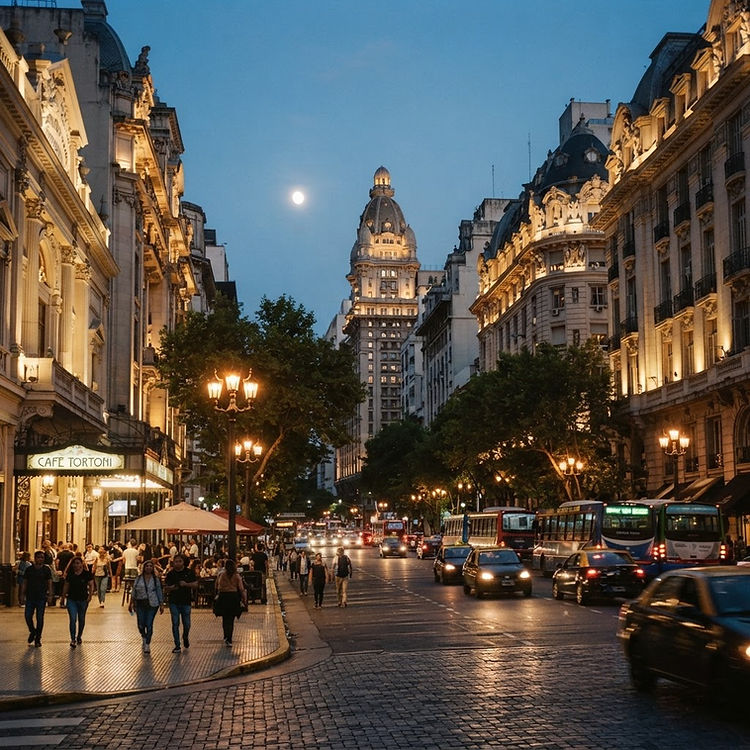
The Obelisco stands at the intersection of the widest avenue as a symbol of the city foundation. It dominates the skyline and serves as the primary meeting point for public gatherings. Nearby, the Teatro Colon represents the peak of European-inspired architecture, serving as a hub for acoustic engineering and performing arts that have long drawn international attention to the local creative scene.
Further south, the metropolitan cathedral reflects the religious and political shifts of the past centuries. Its neoclassical facade stands in contrast to the surrounding government buildings, marking the site where major national events have unfolded since the colonial era. These structures are not merely tourist stops but integral components of the urban fabric that dictate the visual rhythm of the city.
Each landmark provides context for the expansive scale of the boulevards. By studying these monuments, one gains insight into the architectural priorities of past planners who sought to project an image of grandeur and civic progress throughout the city center.
Destinations in this story

Related articles

Exploring The Distinct Neighborhoods Of Cape
Cape Town comprises various districts that offer different experiences, from historic architecture and vibrant streets to modern residential areas and quiet suburban landscapes.
Significant Monuments Of The Cape Peninsula
Key monuments across Cape Town represent the complex historical trajectory of the city, serving as anchors for understanding both colonial impact and political change.
Planning A Day Around Iconic Attractions
Organizing a day in Cape Town requires balancing natural heights and maritime history, allowing enough transition time between mountain views and the bustling waterfront.