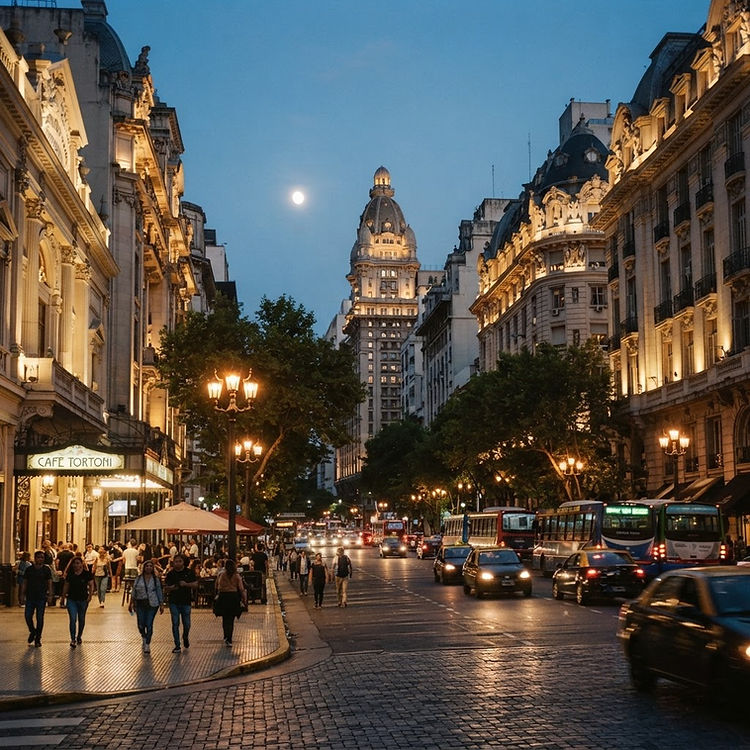
The city was established in 1536 and re-founded in 1580 at the site now known as Plaza de Mayo. Throughout the nineteenth century, large waves of European immigration profoundly altered the cultural landscape, infusing the city with architecture reminiscent of Paris and Madrid. These historical layers remain visible in the ornate facades of the city center and the enduring influence of port traditions.
Following the independence movement from Spain, the city grew into a prosperous gateway for agricultural trade. The wealth generated during this period allowed for the construction of grand boulevards and public spaces that define the urban layout today. This era cemented the city's role as a major cultural center in the region, bridging the gap between colonial heritage and modernity.
Today, the history of the city is preserved within its museums and the grand cemeteries where significant historical figures are laid to rest. Each district offers a unique reflection of these past shifts, maintaining a balance between historical preservation and the requirements of a dense contemporary metropolis.
Destinations in this story

Related articles

Exploring The Distinct Neighborhoods Of Cape
Cape Town comprises various districts that offer different experiences, from historic architecture and vibrant streets to modern residential areas and quiet suburban landscapes.
Significant Monuments Of The Cape Peninsula
Key monuments across Cape Town represent the complex historical trajectory of the city, serving as anchors for understanding both colonial impact and political change.
Planning A Day Around Iconic Attractions
Organizing a day in Cape Town requires balancing natural heights and maritime history, allowing enough transition time between mountain views and the bustling waterfront.