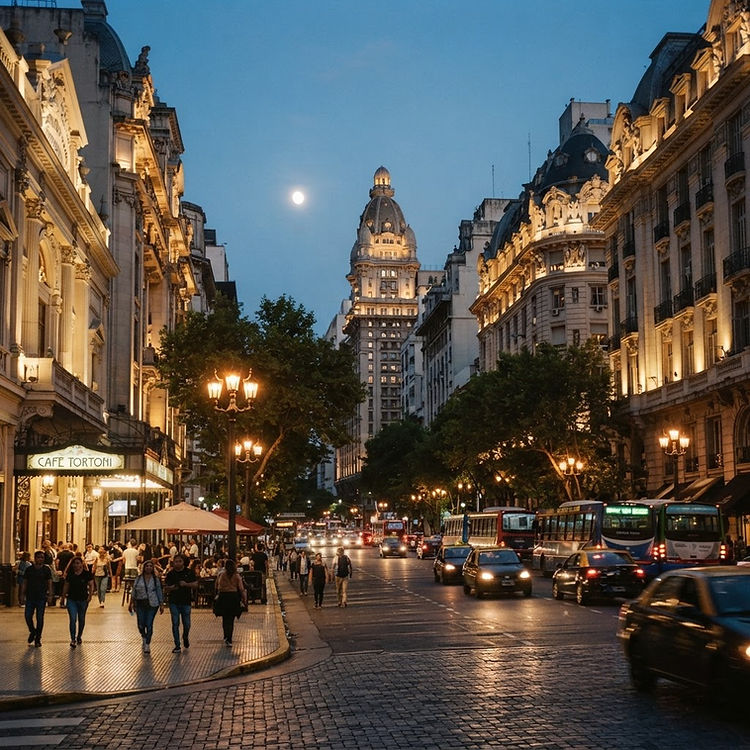
Start your day in the historic center to visit the government buildings that border Plaza de Mayo. From this focal point, walk toward the surrounding cathedrals and colonial structures that house significant cultural archives. The proximity of these sites allows for a morning spent exploring the civic and religious history that shaped the local administration and national identity during the nineteenth century.
In the afternoon, travel south to the cobblestone streets where the local artistic community remains active. This area is known for its brightly colored architecture and small open-air galleries that display local crafts and paintings. Spend time observing the street performances that frequently take place in these pedestrian-friendly zones, which provide a window into the cultural spirit of the southern harbor districts.
End the day by returning to the central avenues to observe the theater district. The transition from administrative buildings to residential and entertainment hubs demonstrates the scale of the city. By clustering these visits based on geography, you ensure a balanced schedule that accounts for the wide expanse of the local landscape.
Destinations in this story

Related articles

Exploring The Distinct Neighborhoods Of Cape
Cape Town comprises various districts that offer different experiences, from historic architecture and vibrant streets to modern residential areas and quiet suburban landscapes.
Significant Monuments Of The Cape Peninsula
Key monuments across Cape Town represent the complex historical trajectory of the city, serving as anchors for understanding both colonial impact and political change.
Planning A Day Around Iconic Attractions
Organizing a day in Cape Town requires balancing natural heights and maritime history, allowing enough transition time between mountain views and the bustling waterfront.