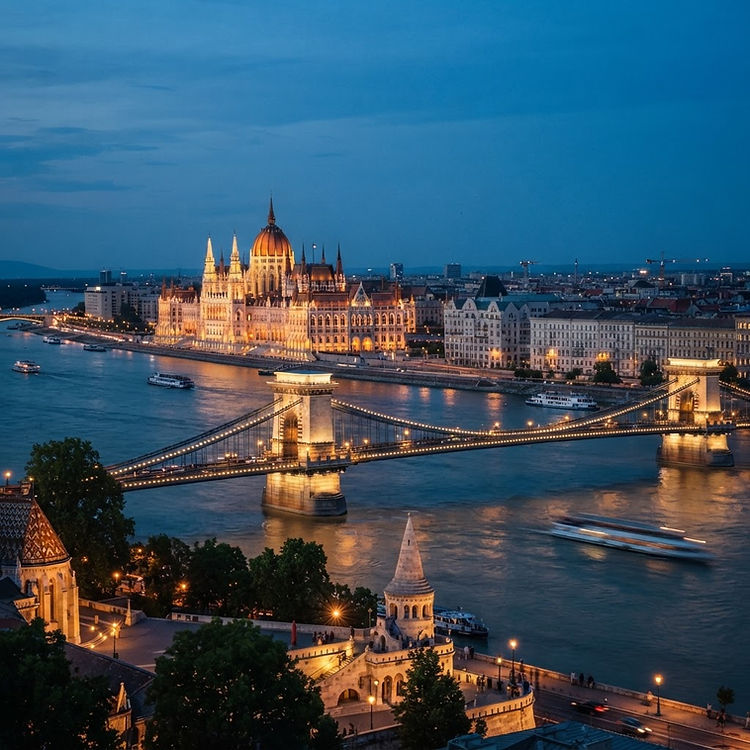
The skyline of Budapest relies on specific landmarks that distinguish the two sides of the river. The parliament building on the Pest bank dominates the water frontage with its neo-Gothic design. Its presence serves as a focal point for the city, reflecting the scale of construction during the late nineteenth century. It remains an essential reference point for orientation when moving along the riverbank.
Across the river, the Buda Castle and the Fisherman's Bastion represent historical fortification and defensive aesthetics. These structures sit on elevated ground, providing a defensive silhouette that contrasts with the administrative buildings on the opposite side. Their construction incorporates various historical elements, preserving a sense of longevity that connects contemporary visitors to the medieval and post-medieval phases of the city.
These monuments matter because they encapsulate the dual nature of the capital. Each structure reflects different aspects of local governance, history, and architectural ambition. By serving as both functional spaces and symbolic anchors, these landmarks maintain the visual coherence of the city, ensuring that the history of the region is constantly present in the modern urban experience.
Destinations in this story

Related articles

Exploring The Distinct Neighborhoods Of Cape
Cape Town comprises various districts that offer different experiences, from historic architecture and vibrant streets to modern residential areas and quiet suburban landscapes.
Significant Monuments Of The Cape Peninsula
Key monuments across Cape Town represent the complex historical trajectory of the city, serving as anchors for understanding both colonial impact and political change.
Planning A Day Around Iconic Attractions
Organizing a day in Cape Town requires balancing natural heights and maritime history, allowing enough transition time between mountain views and the bustling waterfront.