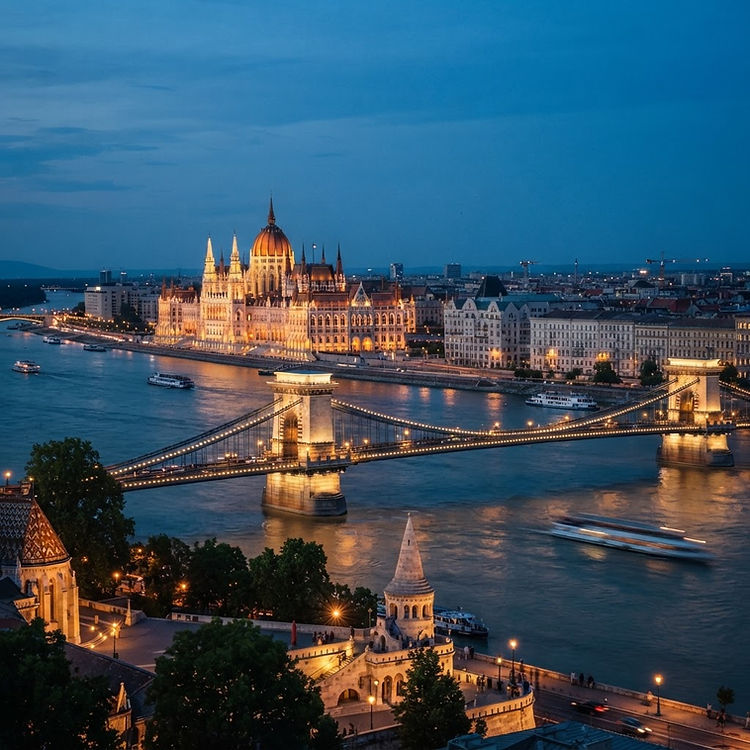
Budapest traces its origins to the Roman town of Aquincum. Over centuries, the settlement evolved through the medieval period before becoming a center of the Austro-Hungarian Empire. This era defined the structural layout and architectural character seen today. The city faced significant destruction during the twentieth century but emerged with its historical core largely intact.
The past remains visible in the streets, where remnants of fortification walls sit near ornate palaces. The unification of Buda, Pest, and Obuda in the late nineteenth century consolidated these distinct sections into a single metropolitan area. This consolidation fostered a period of rapid development that integrated various European design influences into the fabric of the city.
Today, the historical legacy continues to shape urban life. Cultural identities and architectural styles from different periods coexist, providing a visual narrative of development. Navigating the city reveals how previous eras influence current spatial organization and public aesthetics, anchoring the contemporary experience in the rich traditions of the Hungarian capital.
Destinations in this story

Related articles

Exploring The Distinct Neighborhoods Of Cape
Cape Town comprises various districts that offer different experiences, from historic architecture and vibrant streets to modern residential areas and quiet suburban landscapes.
Significant Monuments Of The Cape Peninsula
Key monuments across Cape Town represent the complex historical trajectory of the city, serving as anchors for understanding both colonial impact and political change.
Planning A Day Around Iconic Attractions
Organizing a day in Cape Town requires balancing natural heights and maritime history, allowing enough transition time between mountain views and the bustling waterfront.