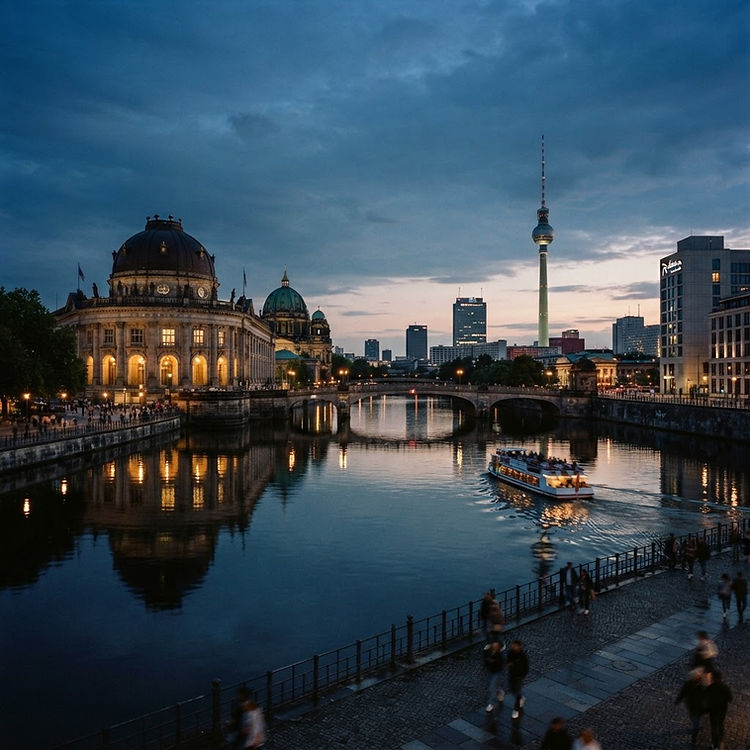
Berlin began as a trade hub on the Spree River, eventually rising to become the administrative center of the Prussian Kingdom and later the German Empire. The twentieth century brought immense upheaval, leading to the division of the city by the Berlin Wall into East and West sectors. This era defined the urban landscape for decades, creating unique development patterns that remain distinct today. The fall of the wall in 1989 began the process of reunification, reshaping the social and physical fabric of the German capital.
Today, the city serves as a living museum of modern history. Visitors can encounter traces of imperial grandeur alongside stark concrete remnants of the socialist era. The integration of these diverse architectural periods characterizes the streetscape, where industrial brickwork often sits adjacent to modern glass structures. This physical overlap ensures that the narrative of the past remains an inseparable component of the contemporary experience.
Public memory is managed through dedicated memorials, former border checkpoints, and preserved historical zones. These sites provide context for the various phases of German political transition. The city encourages reflection on its turbulent twentieth century while focusing on its role as a contemporary cultural and political center.
Destinations in this story

Related articles

Exploring The Distinct Neighborhoods Of Cape
Cape Town comprises various districts that offer different experiences, from historic architecture and vibrant streets to modern residential areas and quiet suburban landscapes.
Significant Monuments Of The Cape Peninsula
Key monuments across Cape Town represent the complex historical trajectory of the city, serving as anchors for understanding both colonial impact and political change.
Planning A Day Around Iconic Attractions
Organizing a day in Cape Town requires balancing natural heights and maritime history, allowing enough transition time between mountain views and the bustling waterfront.