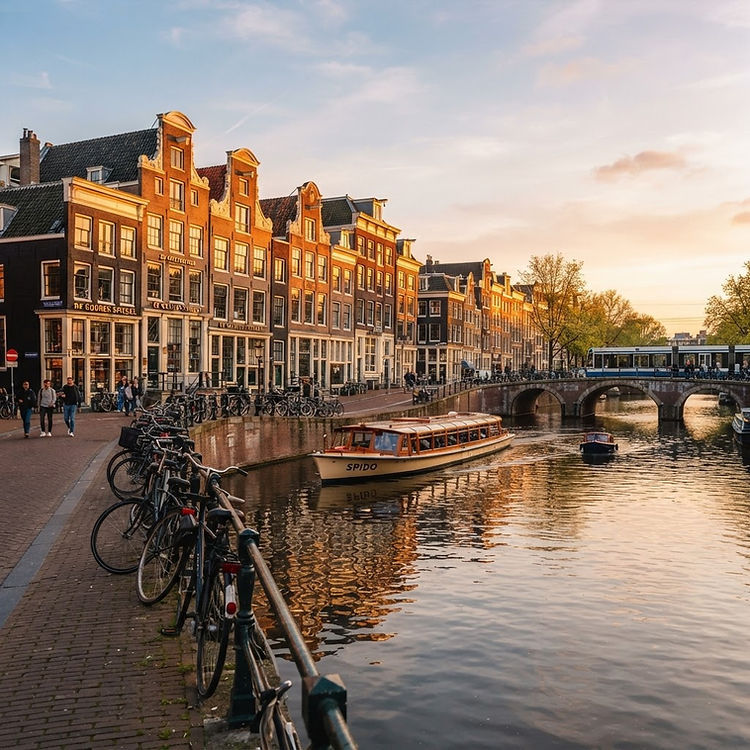
The Westerkerk stands as a prominent landmark in the city, with its spire serving as a navigational point for those walking near the canal district. Its historical importance is linked to the surrounding neighborhood, which includes houses of cultural significance. The Royal Palace on Dam Square also commands attention, functioning as a primary symbol of national authority and political history within the heart of the city.
Monuments dedicated to historical figures and events are distributed throughout the city squares. These structures provide context to the evolving identity of the capital, commemorating periods of both prosperity and struggle. The architecture surrounding these sites often follows a consistent style, contributing to the visual cohesion that makes the urban core recognizable to many.
Preservation of these landmarks remains a priority for the city administration. By maintaining the integrity of these sites, the community ensures that the narrative of the city is visible to the public. These monuments do not simply exist as static objects but function as markers of the shared past that informs the modern experience of living and traveling here.
Destinations in this story

Related articles

Exploring The Distinct Neighborhoods Of Cape
Cape Town comprises various districts that offer different experiences, from historic architecture and vibrant streets to modern residential areas and quiet suburban landscapes.
Significant Monuments Of The Cape Peninsula
Key monuments across Cape Town represent the complex historical trajectory of the city, serving as anchors for understanding both colonial impact and political change.
Planning A Day Around Iconic Attractions
Organizing a day in Cape Town requires balancing natural heights and maritime history, allowing enough transition time between mountain views and the bustling waterfront.