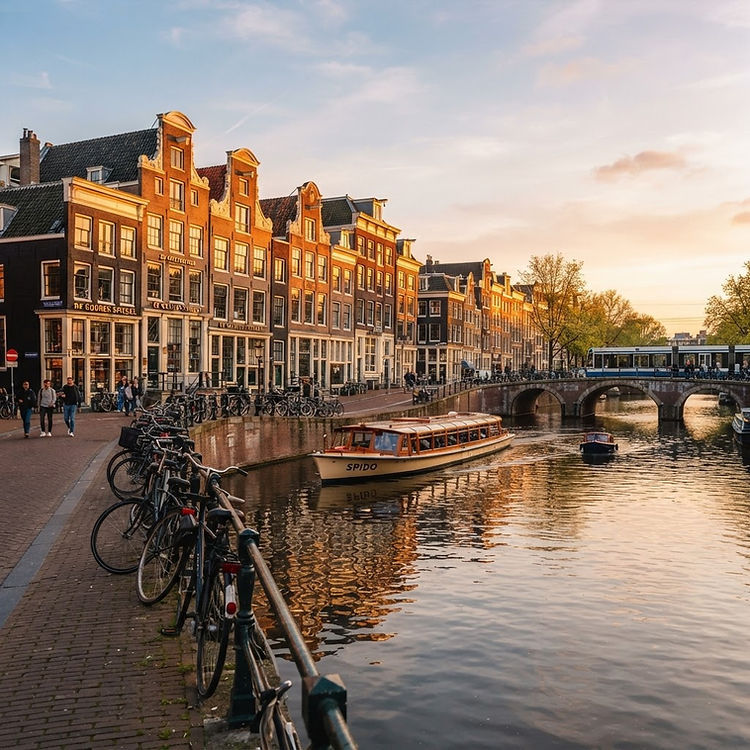
The city originated as a small dam built on the Amstel River in the late Middle Ages. By the seventeenth century, often called the Dutch Golden Age, it emerged as a central hub for international trade. Merchants grew wealthy, commissioning the canal belt that encircles the city center, which remains an architectural hallmark of the period. This expansion solidified its reputation for mercantile success and maritime innovation.
Following its peak, the city navigated through periods of decline and eventual industrial revitalization. Nineteenth-century urban planning expanded beyond the old walls, yet preserved the core identity established centuries earlier. The distinct radial layout reflects a long history of water management, vital to keeping the low-lying land functional through innovative engineering techniques.
Today, the historical legacy persists in the narrow brick townhouses that line the primary waterways. These structures serve as reminders of the civic prosperity that shaped the capital. Preservation efforts ensure the character of the canal district remains largely unchanged, providing a living archive of history for residents and visitors to observe while navigating the streets.
Destinations in this story

Related articles

Exploring The Distinct Neighborhoods Of Cape
Cape Town comprises various districts that offer different experiences, from historic architecture and vibrant streets to modern residential areas and quiet suburban landscapes.
Significant Monuments Of The Cape Peninsula
Key monuments across Cape Town represent the complex historical trajectory of the city, serving as anchors for understanding both colonial impact and political change.
Planning A Day Around Iconic Attractions
Organizing a day in Cape Town requires balancing natural heights and maritime history, allowing enough transition time between mountain views and the bustling waterfront.