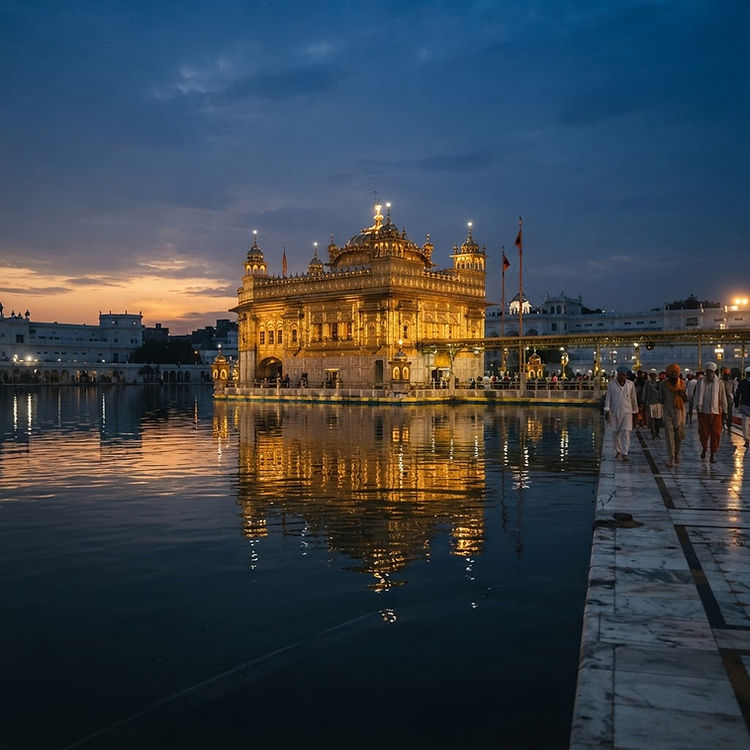
The Golden Temple serves as the primary landmark, defined by its central pool and gilded sanctuary that attracts visitors from diverse backgrounds. The architectural design emphasizes communal participation and accessibility, with the structure acting as a focal point for spiritual activity. The surrounding masonry and white marble paths contribute to the visual cohesion of the complex, reflecting historical aesthetic preferences for balance and symmetry that remain maintained today.
Jallianwala Bagh represents a different type of landmark, acting as a memorial space that preserves the memory of historical resistance. The architecture is understated, prioritizing the preservation of specific site features that serve as reminders of events from the past. The physical layout emphasizes open space, allowing for the contemplation of history within an urban environment that has otherwise continued to evolve around it.
These landmarks together define the city character, highlighting the intersection of devotion and history. They are not merely tourist attractions but are functional elements of the urban fabric. Their design and upkeep are essential to the identity of the city, ensuring that visitors understand the weight of the past alongside the living heritage.
Destinations in this story

Related articles

Exploring The Distinct Neighborhoods Of Cape
Cape Town comprises various districts that offer different experiences, from historic architecture and vibrant streets to modern residential areas and quiet suburban landscapes.
Significant Monuments Of The Cape Peninsula
Key monuments across Cape Town represent the complex historical trajectory of the city, serving as anchors for understanding both colonial impact and political change.
Planning A Day Around Iconic Attractions
Organizing a day in Cape Town requires balancing natural heights and maritime history, allowing enough transition time between mountain views and the bustling waterfront.