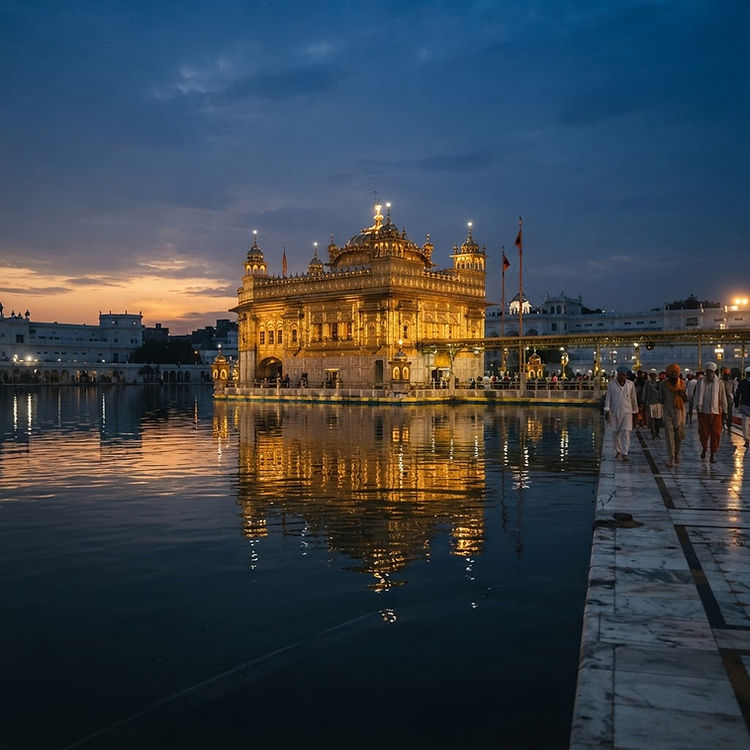
Amritsar traces its origins to the sixteenth century when Guru Ram Das established a settlement around a sacred pool. This city grew as a center of faith and commerce, serving as a crossroads for trade routes connecting Central Asia and the Indian plains. Over the centuries, the region witnessed the rise and fall of the Mughal Empire and the subsequent establishment of the Sikh Empire under Maharaja Ranjit Singh, who significantly transformed the city architecture.
Political history marks the twentieth century with profound events that shaped the national narrative. The Jallianwala Bagh site remains a somber reminder of colonial history, influencing the cultural memory of the local populace. These historical layers are visible in the narrow lanes of the old city, where traditional masonry sits alongside structures reflecting eras of rapid expansion and administrative change.
Today, the past informs the daily rhythm of the city streets. Traditional craftsmanship continues in older quarters, while the infrastructure reflects decades of modernization. Visitors observe the intersection of deep-rooted religious customs and the energetic pace of contemporary urban life, maintaining a connection to the historical identity that remains central to the city character.
Destinations in this story

Related articles

Exploring The Distinct Neighborhoods Of Cape
Cape Town comprises various districts that offer different experiences, from historic architecture and vibrant streets to modern residential areas and quiet suburban landscapes.
Significant Monuments Of The Cape Peninsula
Key monuments across Cape Town represent the complex historical trajectory of the city, serving as anchors for understanding both colonial impact and political change.
Planning A Day Around Iconic Attractions
Organizing a day in Cape Town requires balancing natural heights and maritime history, allowing enough transition time between mountain views and the bustling waterfront.