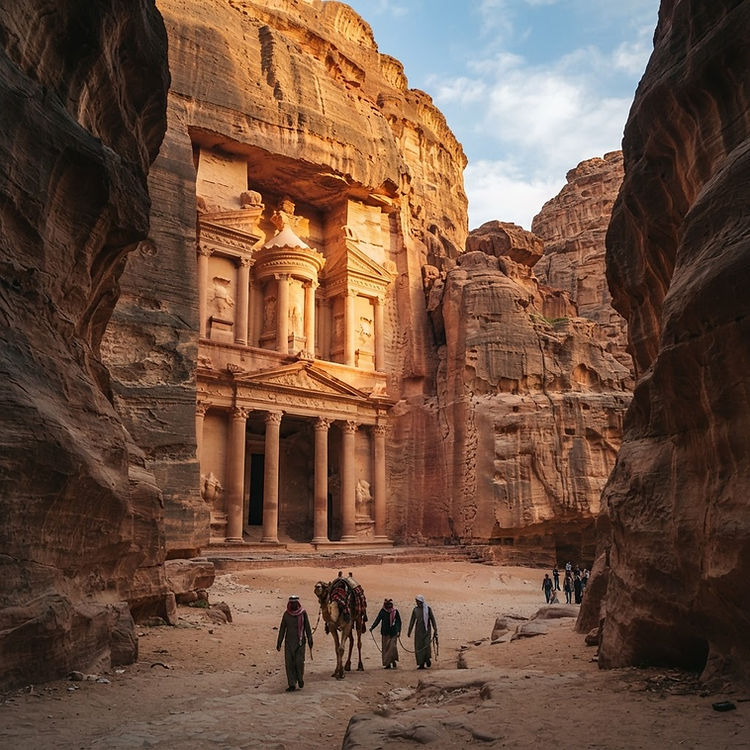
A day in Amman usually begins at the Citadel, situated on the highest hill in the city center. This site contains remnants from various periods, including a temple and a palace, providing a visual overview of the city geography. Visitors often spend their morning here before descending toward the Roman Theatre located at the foot of the hill.
The Roman Theatre represents the architectural legacy of the city during the second century and remains a central point of interest. Following this, the surrounding downtown area offers access to traditional markets where textiles and spices are sold. This dense urban corridor allows travelers to observe the daily rhythms of the city between visiting the various monuments.
After exploring the low-lying center, a transition to one of the surrounding residential hills offers a different perspective of the landscape. Moving between these points involves navigating the hills that define the city terrain. By grouping visits based on altitude and proximity, it is possible to experience the essential landmarks while maintaining a manageable pace throughout the day.
Destinations in this story

Related articles

Exploring The Distinct Neighborhoods Of Cape
Cape Town comprises various districts that offer different experiences, from historic architecture and vibrant streets to modern residential areas and quiet suburban landscapes.
Significant Monuments Of The Cape Peninsula
Key monuments across Cape Town represent the complex historical trajectory of the city, serving as anchors for understanding both colonial impact and political change.
Planning A Day Around Iconic Attractions
Organizing a day in Cape Town requires balancing natural heights and maritime history, allowing enough transition time between mountain views and the bustling waterfront.