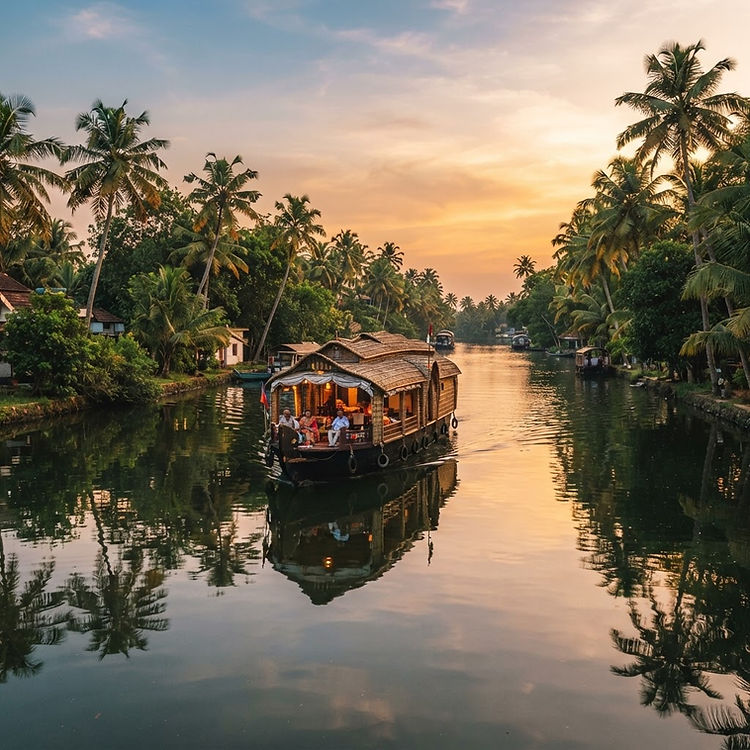
Alappuzha rose to prominence under the vision of Raja Kesavadas, the Dewan of Travancore in the eighteenth century. By developing the harbor and inviting merchants from diverse backgrounds, he transformed a quiet coastal village into a thriving center for trade. The arrival of European powers, particularly the British, further cemented its status as a vital link in the spice export economy. These historical influences remain etched into the town through its distinct architecture and the layout of its canals.
The colonial legacy is visible in the repurposed warehouses and the remnants of the old pier that once facilitated heavy cargo transit. While modern infrastructure has evolved, the strategic importance of the waterways remains central to the local identity. The integration of traditional agrarian practices and maritime history creates a landscape where the past continues to inform the daily rhythm of life for the residents.
Today, the heritage of the port is preserved in the older quarters where grand colonial structures stand alongside traditional Kerala homes. These remnants act as silent witnesses to centuries of transition, guiding the growth of the modern city while maintaining a connection to its maritime foundation.
Destinations in this story

Related articles

Exploring The Distinct Neighborhoods Of Cape
Cape Town comprises various districts that offer different experiences, from historic architecture and vibrant streets to modern residential areas and quiet suburban landscapes.
Significant Monuments Of The Cape Peninsula
Key monuments across Cape Town represent the complex historical trajectory of the city, serving as anchors for understanding both colonial impact and political change.
Planning A Day Around Iconic Attractions
Organizing a day in Cape Town requires balancing natural heights and maritime history, allowing enough transition time between mountain views and the bustling waterfront.